Bitter Melon Extract Powder: What Should Be Consistent from Lot to Lot?
Approving a sample of bitter melon extract powder is one step. Keeping that ingredient consistent across subsequent lots is another.
For manufacturers, the real test begins after the first order. A new lot should continue to match the approved ingredient in botanical identity, extract characteristics, physical properties, and quality parameters. Otherwise, even a familiar ingredient name can represent a different raw-material or processing profile from one shipment to the next.
This matters when sourcing bulk bitter melon extract powder for repeat production. A consistent specification gives procurement and R&D teams a reference point for evaluating incoming lots and managing formulation continuity.
What Does Lot-to-Lot Consistency Mean for Bitter Melon Extract Powder?
Lot-to-lot consistency means that successive batches remain within the agreed specifications for the characteristics that define the ingredient.
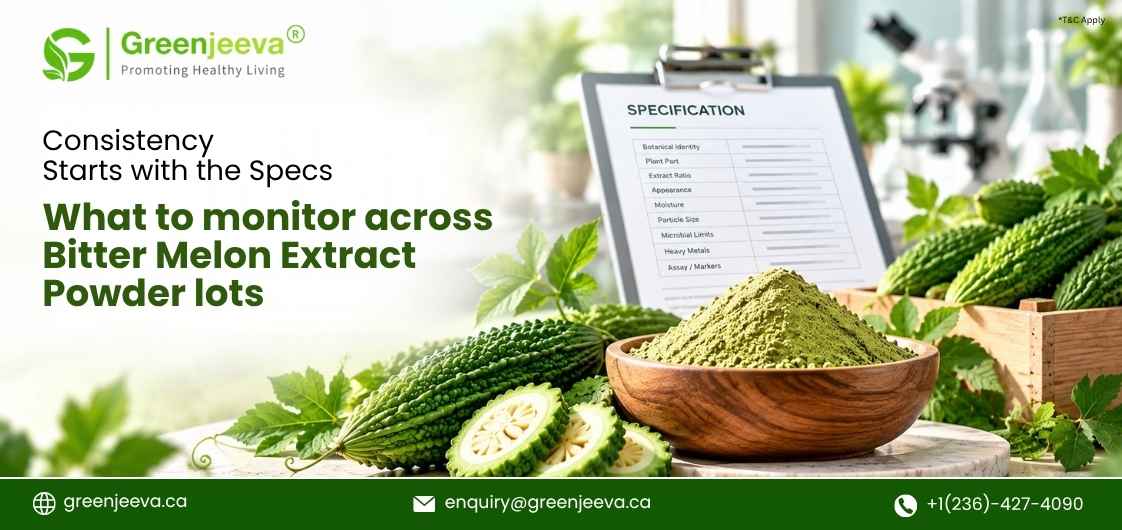
For a Momordica charantia extract powder, this can include:
- Botanical identity
- Plant part
- Extract ratio
- Appearance
- Moisture
- Particle characteristics
- Microbiological limits
- Heavy metal limits
- Assay or marker specifications, where applicable
Not every parameter will have the same acceptable range. The important point is that the specification is established before commercial purchasing and then used consistently for subsequent lots.
Botanical Identity Should Stay Consistent
The first reference point is the raw material itself.
Bitter melon is commonly identified botanically as Momordica charantia. However, a commercial ingredient specification should provide more information than a common name alone.
Buyers should verify:
Botanical name: Momordica charantia
Plant part:
Confirm whether the ingredient is derived from the fruit or another part of the plant.
Ingredient description:
The specification should clearly identify the material as an extract powder and describe the relevant raw material.
This becomes particularly important when comparing suppliers. “Bitter melon extract” can be used as a broad product description, while the technical specification provides the information needed to determine what is being supplied.
The Extract Ratio Is Only One Part of Consistency
A 10:1 bitter melon extract indicates a defined relationship between the starting botanical material and the finished extract. However, the ratio should not be treated as a complete description of the ingredient.
Two extracts with the same stated ratio can still differ in raw material, extraction process, plant part, or other specifications.
For that reason, buyers evaluating bitter melon extract powder 10:1 should review the complete specification rather than using the ratio as the only comparison point.
If an extract ratio is part of the approved specification, subsequent lots should continue to meet that requirement.
What Physical Specifications Should Buyers Monitor?
Physical characteristics can affect handling, processing, and how an ingredient performs within a powder blend.
Depending on the product and application, buyers may review:
Appearance and color
Useful for identifying noticeable variation between approved and incoming lots.
Odor
Unexpected changes can warrant further investigation.
Moisture
Important for powder stability and storage.
Particle characteristics
Particle size or distribution can affect blending, handling, and processing.
Solubility or dispersibility
Relevant when the finished formulation requires the extract to disperse in a liquid system.
These parameters should be assessed against the supplier's established specification and the manufacturer's own incoming-material requirements.

What Quality Parameters Should Remain Within Specification?
Physical consistency is only one part of lot qualification. Quality and safety parameters also need defined limits.
For bitter melon fruit extract intended for commercial formulations, buyers may review:
- Total aerobic microbial count
- Yeast and mold
- Specified pathogens
- Heavy metals
- Residual solvents, where applicable
- Pesticide requirements, where applicable
- Assay or marker compounds, where specified
The exact testing panel depends on the ingredient, extraction process, intended application, and destination market.
For Canadian buyers, the documentation should also align with the requirements of the manufacturer's quality system and the intended use of the ingredient.
Why the COA Matters Beyond the First Order
A Certificate of Analysis is more useful when it becomes part of an ongoing lot-monitoring process.
The first COA can establish a baseline for an approved ingredient. Subsequent COAs can then be reviewed against that specification before the material enters production.
For example, procurement and quality teams can compare:
Approved specification → Previous lot → Current lot
This makes it easier to identify changes in parameters such as moisture, appearance, microbiological results, or other defined specifications.
A COA should support the specification. It should not replace it.
From Sample Approval to Bulk Procurement
The transition from a sample to bulk bitter melon extract powder changes the purchasing question.
At sample stage, the focus may be whether the ingredient is suitable for initial formulation work.
At commercial scale, the question becomes whether the same specification can be maintained across repeat lots.
That makes several documents particularly useful during supplier qualification:
- Product specification
- Representative COA
- Batch-specific COA
- Allergen statement
- Microbiological specification
- Heavy metal data
- Country-of-origin information
- Applicable certifications
- Lot or batch traceability information
The exact documentation package will depend on the manufacturer's requirements and the intended market.
Sourcing Bitter Melon Extract Powder in Canada
For manufacturers sourcing bitter melon extract powder wholesale, consistency should be part of the supplier conversation from the beginning.
Ask how the supplier defines the ingredient, which parameters are controlled between lots, and what documentation accompanies commercial shipments.
For buyers looking for a bitter melon extract supplier in Canada, the same principle applies. Local availability can simplify procurement, but the technical specification still needs to establish what is being supplied and how subsequent lots are evaluated.
A reliable bulk program is not simply about securing one shipment. It is about having a defined ingredient specification that can be referenced as purchasing continues.
The Takeaway
For manufacturers, consistency is not just a supplier attribute. It is a specification that can be measured.
When sourcing bitter melon extract powder, establish the approved parameters before moving into repeat purchasing. Keep botanical identity, plant part, extract characteristics, physical properties, quality limits, and documentation aligned from one lot to the next.
That gives procurement, quality, and R&D teams a common reference for evaluating incoming material and maintaining greater continuity across commercial production.