Organic Berry Powders for Food, Beverage, and Supplement Manufacturing in Canada
Summary, the quick version
Berries are only fresh for a few weeks a year, which is exactly why powder became the format that lets manufacturers use them year-round.
How a berry powder is dried, freeze-dried, or spray-dried is a real technical decision that affects color and compound retention, not just a marketing term.
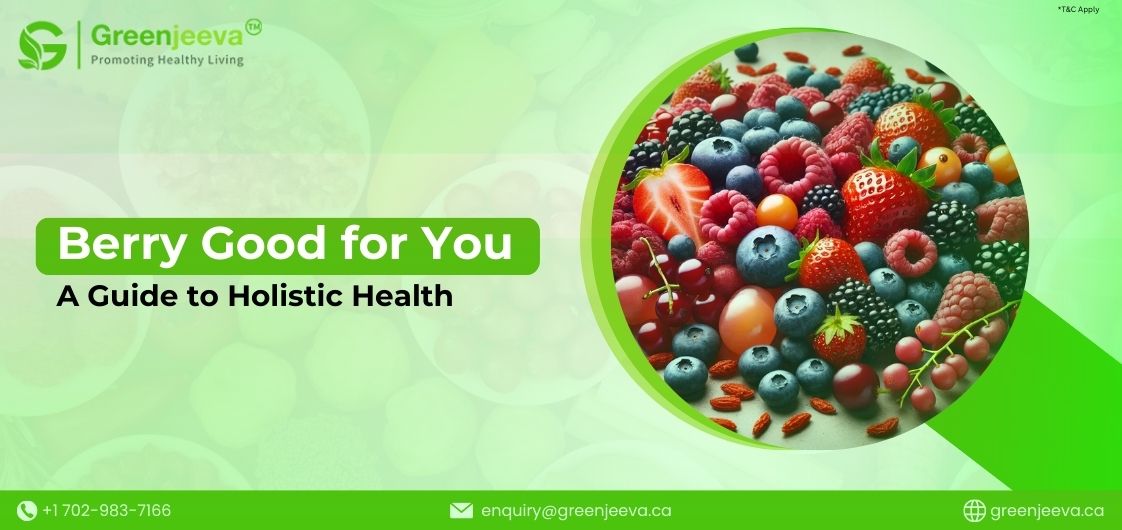
Acai, acerola, goji, elderberry, blackberry, and raspberry each have their own distinct composition and color profile.
Any nutrition or health claim on a finished product using these ingredients is the manufacturer's responsibility to substantiate.
Green Jeeva Canada supplies a range of organic berry powders in pack sizes from 1 kg to 25 kg, tested and documented, with stock held in Canada.
Fresh berries have a short window. A few weeks of true season, and then they are gone until next year, or shipped from somewhere warmer at a cost that shows up on the price tag. Powder solves that problem in the simplest way possible, by capturing the fruit at its peak and drying it into something a manufacturer can use in January just as easily as in July.
This guide is written for food, beverage, and supplement manufacturers in Canada sourcing organic berry powders. It covers the processing decision that shapes how a berry powder performs, freeze-drying versus spray-drying, walks through the composition of the specific berries in this range, covers what to confirm on a specification, and explains how to source them with confidence.
Freeze-Dried vs Spray-Dried, the Decision That Actually Matters
How a berry is dried has more effect on the finished powder than which berry it is. Freeze-drying removes moisture at low temperature under vacuum, which tends to preserve color and the compounds that give a berry its character. Spray-drying uses heat to dry a liquid puree quickly, which is more efficient at scale but exposes the material to more heat in the process.

Neither method is universally better. Freeze-drying suits a formulation where colour and compound retention justify the cost, while spray-drying suits high-volume applications where a uniform, free-flowing powder at a lower costmattersmore. Confirm which drying method a specific berry powder uses on its specification, since the name of the fruit alone does not tell you. Two suppliers can both sell you acai powder, for instance, and hand you materials that look, dissolve, and cost quite differently depending on which process was used.
What Each Berry Actually Brings to a Formulation
Acai, acerola, goji, elderberry, blackberry, and raspberry each have their own composition, colour, and flavour profile. Each is described here by what itcontainsand how it behaves in a formula, not by any effect on the person consuming the finished product.

Anthocyanins are the class of plant pigments responsible for the deep red, purple, and black colours across most of these berries, and they are chemically classified as antioxidants due to their reactivity, a compositional fact rather than a statement about what they do once consumed. Acerola stands out from the others as a natural, concentrated source of vitamin C rather than an anthocyanin-forward berry, which is why it is often selected specifically for that purpose in a formulation. Because color is such a central reason these ingredients get chosen, it is worth understanding what can cause it to vary from one batch to the next.
Why Color Can Vary Between Batches, and How to Manage It
Anthocyanin levels in a fruit are influenced by growing conditions, ripeness at harvest, and the drying process itself, so a natural berry powder can show some colour variation from one harvest or production run to the next. This is a normal characteristic of a natural ingredient rather than a defect, but it is still worth planning for in a formulation that depends on consistent color.
A few practical habits help manage this. Ask your supplier for a color value or a visual reference range on the specification, rather than relying on the product name alone. Where colour consistency is critical, request a sample from the specific lot you would be ordering, rather than a general reference sample, and confirm the drying method has not changed between orders, since a shift from spray-dried to freeze-dried material, or the reverse, will change the colour outcome even if the fruit species stays the same. Building this check into your standard incoming inspection process, rather than treating it as a one-time qualification step, catches drift before it reaches a finished batch.
Where Berry Powders Fit in a Formulation
Berry powders are used wherever a formulator wants natural color, flavor, and a recognizable fruit identity on the label. Green Jeeva supplies the raw material, and the manufacturer owns any claim about the finished product.
Beverages and functional drink mixes, where color and flavor carry through clearly.
Smoothie and shake powders, often blending more than one berry for color and flavor balance.
Bars, baked goods, and snacks, where berry powder adds natural color and fruit flavor.
Supplement capsules, tablets, and powder blends, where a recognisable fruit powder supports a clean label.
Confectionery and gummies, particularly for elderberry and blackberry, valued for their strong natural color.
What to Confirm on a Berry Powder Specification
Because this range spans several distinct fruits and two different drying methods, a few specification points matter across the board. Confirm these before you approve a supplier or a specific lot.
Drying method, freeze-dried or spray-dried, confirmed explicitly rather than assumed.
Botanical identity and country of processing, tied to the specific lot.
Color value or visual reference, particularly important for anthocyanin-rich berries used for their color contribution.
Heavy metal and microbiological limits with test methods.
Non-GMO certification status.
Organic certification, matched to the claim you plan to make.
A supplier that can confirm the drying method and color consistency in writing is generally easier to build a repeatable formulation around than one that treats every berry powder as interchangeable.
Sourcing Organic Berry Powders from Green Jeeva Canada
Green Jeeva Canada supplies organic acai, acerola, goji, elderberry, blackberry, and raspberry powders for food, beverage, and supplement manufacturing,testedand documented. Here is what a procurement team needs to know.
A range of organic berry powders, each with its own specification and color profile.
Heavy metals and microbiology tested, and non-GMO certified.
Green Jeeva Canada is COR, FDA, Halal, Kosher, GMA, and CFIA certified, and the material is fully traceable.
Pack sizes from 1 kg to 25 kg across this range, suited to both sampling and production volumes.
A free sample is available, and a bulk order quotation can be placed on the website.
Stock is held in Canada, and documents download after registration.
If you are building a wider fruit powder portfolio, this range pairs well with ingredients such as organic apple fruit powder and organic baobab fruit pulp powder, both available through the same sourcing process.
Ready to source bulk organic berry powder in Canada?
View stock, the pricing structure, compliance documents, MOQ, and pack size on the website, request a free sample, and place a bulk organic berry powder quotation with Green Jeeva Canada.
Organic berry powders are supplied by Green Jeeva Canada as raw ingredients for food, beverage, and dietary supplement manufacturing. Any nutrition or health claim on a finished product should be verified and substantiated by the manufacturer and comply with applicable regulations in the target market. This article is written by the Green Jeeva Canada QA and RA team for sourcing and formulation guidance.