
How to Store Bulk Ginger Powder to Preserve Aroma and Shelf Life
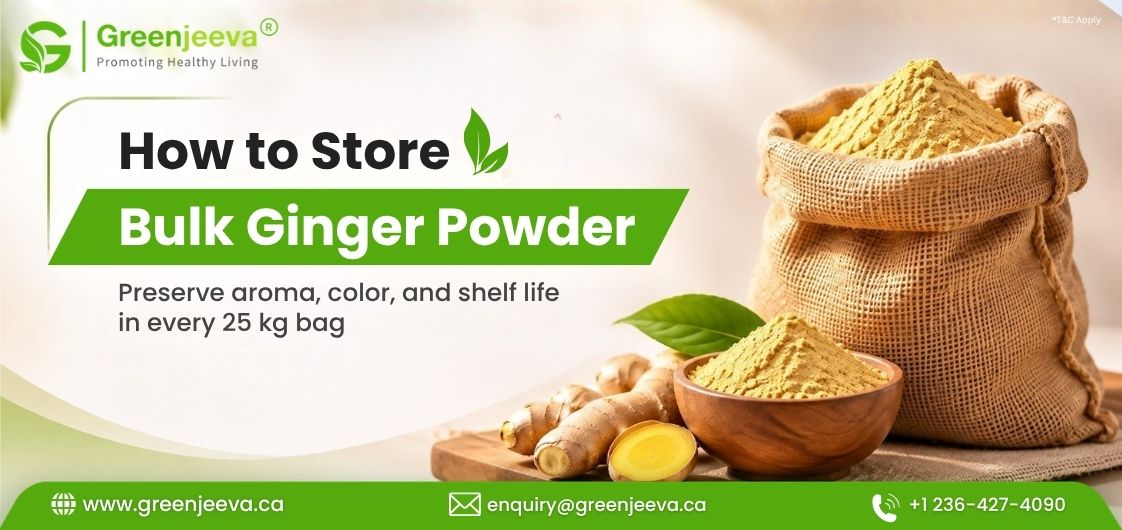
Good storage is the simplest way to protect the aroma, color, and flowability of bulk ginger powder after it arrives at your facility. For food manufacturers, spice blenders and contract manufacturers, a well-stored lot behaves the same on the production line in month twelve as it did in week one.
Ginger root powder is a fine, dry botanical ingredient. It is warm, pungent aroma comes from volatile compounds that slowly escape or break down when the powder is exposed to heat, air, light, and moisture. Once that aroma fades, it cannot be restored. Poor storage also leads to caking, color change and off notes that can force a batch to be reworked or rejected.
This guide explains how to receive, store, handle and monitor 25 kg bulk ginger powder so you get the full usable life out of every lot of organic ginger root powder you buy.
What Causes Ginger Root Powder to Lose Aroma and Quality
Five factors do most of the damage to stored ginger root powder. Controlling them is the whole job of a storage plan.
- Moisture. Ginger powder is hygroscopic, meaning it pulls water from humid air. Absorbed moisture causes lumps and caking, makes the powder harder to dose and blend, and creates conditions that can affect microbial quality.
- Heat. Warm storage speeds up the loss of volatile aroma compounds. A pallet stored near a dock door, roof or heater will lose its sharp, fresh character faster than one in a cool zone.
- Oxygen. Air exposure slowly oxidizes aroma and flavour compounds. Every time a bag is opened and left loosely closed, more fresh air reaches the powder.
- Light. Direct sunlight and strong artificial light can fade the light brown to yellowish brown color and contribute to flavour change.
- Odour transfer. Fine powders absorb strong smells from nearby materials. Storing ginger next to garlic, onion, cleaning chemicals, or fuel can leave noticeable off notes.
Because powder has far more surface area than whole dried ginger, it reacts to these factors faster. That is why bulk ginger powder needs more care than whole or sliced ginger.
Ideal Storage Conditions for Bulk Ginger Powder
Store bulk ginger powder in a cool, dry, dark, clean, and well-ventilated area, sealed in its original packaging. The table below shows common industry targets for dry spice storage. Always check the specification sheet for your lot, since it takes priority over general guidance.

Temperature stability matters as much as the number itself. Repeated warm–cool swings can cause condensation inside packaging, which leads to clumping even when the room seems dry. A dedicated dry-goods zone with a simple temperature and humidity logger is usually enough for most facilities.
Receiving and Inspecting 25 kg Bulk Ginger Powder
Good storage starts at the loading dock. A quick, consistent inspection catches problems before a damaged bag enters your inventory.
- Check the outer packaging. Look for tears, punctures, crushed corners, water stains, or broken seals on each 25 kg bag. Damaged bags should be set aside and reported to your supplier.
- Match the documents. Confirm the lot number on each bag matches the Certificate of Analysis (CoA), packing list and organic certification documents.
- Note the dates. Record the manufacturing date and the best-before or retest date for every lot in your inventory system.
- Do a quick sensory check. On a sample, confirm the color, fine texture and characteristic warm, pungent aroma are as expected, with no musty or foreign odours.
- Move it quickly. Don't leave pallets sitting on a warm or damp dock. Transfer them to the dry storage zone the same day.
Keeping a simple receiving log for each lot of organic ginger root powder makes quality audits and supplier follow-ups much easier.
Handling Opened Bags
An opened bag is where most aroma loss and caking begin. A 25 kg bag is rarely used in a single production run, so how you handle partial bags makes a real difference.
- Reseal immediately. Press out excess air, then close the inner liner with a heat sealer, tie, or clip. Fold and close the outer bag as well.
- Use clean, dry tools. Wet scoops or shared utensils introduce moisture and cross-contamination. Keep dedicated scoops for ginger.
- Transfer to airtight bins when needed. For frequent use, move a working quantity into a food-grade, airtight, opaque container. Label it with the product name, lot number and date opened.
- Never top up old powder with new. Mixing lots makes traceability impossible and spreads any quality issue across both.
- Limit open time. Open bags in a dry area, take what you need and close them right away. Avoid opening bags near steam, washing stations or open doors.
If an opened bag will sit for several weeks, consider dividing the remainder into smaller sealed packs. Less headspace means less air in contact with the powder.
Warehouse Practices: FIFO and Lot Tracking
Rotating stock correctly keeps older lots from aging on the shelf while newer ones get used first.
- Use FEFO or FIFO. "First expired, first out" (FEFO) is ideal, since it uses lots in order of their best-before or retest dates. "First in, first out" (FIFO) works when lots arrive in date order.
- Label every pallet clearly. Show the product name, lot number, received date and best-before date where staff can read them without moving bags.
- Store by lot. Keep each lot together on its own pallet or rack position, so the right lot is easy to pick and trace.
- Avoid heavy stacking. Too much weight compresses fine powder at the bottom of a stack and can cause hard lumps. Follow your supplier's stacking guidance.
- Keep the area clean. Regular cleaning and pest control protect both the packaging and the product.
Lot tracking also protects your organic status. Certified organic ingredients need clear records showing they were kept separate from conventional materials.
Storage Considerations for Canadian Facilities
Canada's seasons create specific storage challenges for bulk ginger powder, so plan for each part of the year.
- Coastal humidity. Facilities in coastal regions such as British Columbia's Lower Mainland face damp air for much of the year. Dehumidifiers and sealed storage zones help keep humidity under control.
- Winter-to-warehouse condensation. Bags delivered in freezing weather can collect condensation when moved straight into a warm room. Let pallets reach room temperature while still sealed before opening them.
- Summer heat. Warehouses without climate control can get hot in summer, especially near roofs and south-facing walls. Store ginger in the coolest part of the building.
- Heated, dry winter air. Heating dries the air, which is generally good for powders, but it can also raise temperatures near vents and heaters. Keep pallets clear of those areas.
A year-round temperature and humidity log helps you spot seasonal problems early before they affect your inventory.
Shelf Life and How to Check Quality Over Time
The shelf life of ginger root powder depends on the lot, the packaging and how it is stored, so always follow the best-before or retest date on your supplier's specification sheet. Good storage helps you reach that date with the powder still performing as expected. Poor storage can shorten its useful life well before the printed date.
For longer-held inventory, a simple routine check helps confirm quality:

If powder shows hard caking, an off odour or visible moisture, quarantine it and contact your organic ginger root powder supplier. Your QA team may also choose to retest moisture or microbiology on older lots before use.
Common Storage Mistakes to Avoid
Most storage problems come from a handful of everyday habits:
- Leaving bags directly on concrete floors, where they pick up cold and moisture
- Storing ginger beside garlic, onion powder, strong spices, or cleaning products
- Folding an opened bag loosely instead of sealing the liner
- Placing pallets near dock doors, windows, ovens, or heating vents
- Moving cold bags into a warm room and opening them right away
- Mixing powder from different lots in one container
- Ordering far more than you can use before the best-before date
That last point is easy to overlook. Buying bulk ginger powder in quantities that match your production schedule keeps stock fresh and reduces waste.
Why Your Organic Ginger Root Powder Supplier Matters
Storage at your facility can only preserve the quality the powder had when it arrived. That makes your choice of organic ginger root powder supplier the first step in shelf-life planning.
Look for a supplier that provides:
- Food-grade 25 kg packaging with a sealed inner liner
- A batch-specific Certificate of Analysis, including microbiological and heavy metal results
- Clear manufacturing and best-before dates on every lot
- Organic certification documents and lot-level traceability
- Local inventory, so powder spends less time in transit and reaches you fresher
Green Jeeva Inc. supplies 25 kg bulk ginger powder to Canadian food manufacturers, spice blenders, and nutraceutical companies, with batch documentation and sample support for evaluation.
Conclusion
Storing bulk ginger powder well comes down to a few consistent habits: keep it cool, dry, dark, and sealed, rotate lots by date, and inspect stock regularly. These steps protect the aroma, color, and flowability your production depends on, and help you get the full usable life from every 25 kg bag.
Looking for a dependable source? Explore Green Jeeva's organic ginger root powder or contact our team to request a sample and documentation.