
Achieving Visual Appeal: How Alkalized Cocoa Powder 10–12% Delivers Rich Color Without Synthetic Additives
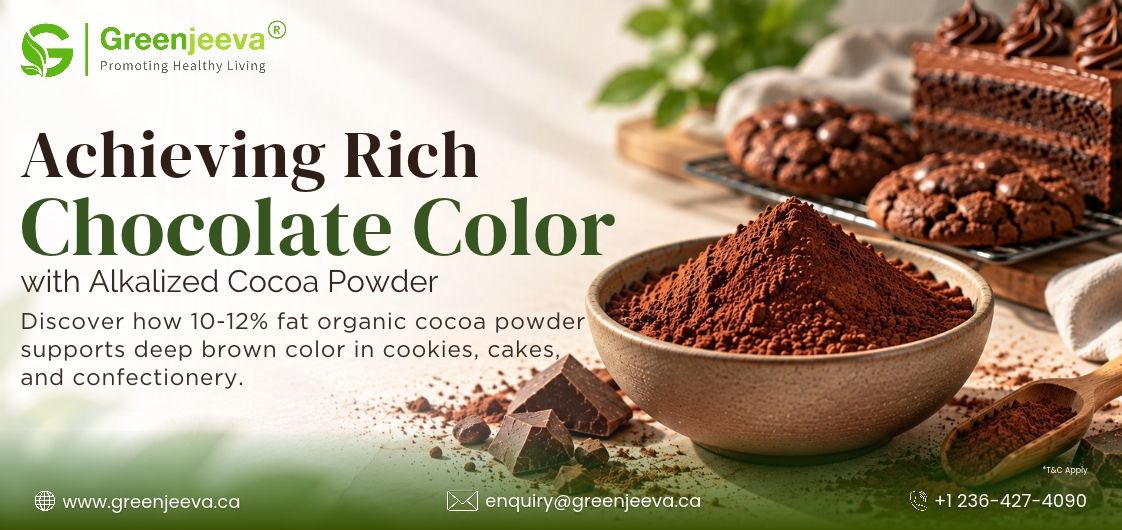
For Canadian bakeries and confectionery manufacturers, chocolate color is an important part of product development. Consumers often associate deep brown brownies, dark chocolate cookies, and richly colored cakes with a distinctive chocolate appearance. Achieving that look consistently, however, requires more than simply increasing the amount of cocoa powder in a recipe.
Alkalized cocoa powder offers manufacturers a practical ingredient option for developing darker chocolate-colored products without relying on synthetic colorants. Also known as Dutch-process cocoa, it undergoes treatment with a food-grade alkali that changes its acidity, color, and flavor profile.
For manufacturers seeking organic ingredients, organic cocoa powder 10–12% fat can be evaluated as part of a formulation strategy focused on color consistency, flavor balance, and production efficiency.
The key is understanding how alkalization works, how cocoa interacts with other baking ingredients, and which specifications matter when sourcing cocoa powder in bulk.
Why Alkalized Cocoa Powder Produces a Darker Color
Understanding the Dutch Process
Natural cocoa powder retains more of cocoa's natural acidity and generally produces a lighter brown color. During alkalization, cocoa is treated with an alkaline substance, commonly potassium carbonate, under controlled processing conditions.
This treatment changes the cocoa's pH and influences its color and flavor. Depending on the degree of alkalization, the resulting powder can range from reddish-brown to a deeper brown or very dark shade. It typically has a milder, less acidic flavor than natural cocoa.
The Dutch process cocoa method is particularly relevant for applications where manufacturers want a defined chocolate appearance and a consistent flavor profile.
Why Color Depends on More Than Cocoa Quantity
Increasing cocoa powder in a recipe can intensify color, but it also changes flavor, solids content, and the balance of the formulation.
Alkalized cocoa offers another route: selecting a powder with a suitable color profile and incorporating it at a level that meets the product's sensory and technical requirements.
This distinction matters in commercial production, where increasing ingredient quantities can affect cost, texture, moisture balance, and processing performance.
For example, a bakery developing dark chocolate cookies might compare natural cocoa with a medium- or darker-alkalized powder. The team can then evaluate the baked color and flavor before adjusting the total cocoa inclusion rate.

Applications for Canadian Food Manufacturers
Cookies and Brownies
Cookies and brownies are strong candidates for testing alkalized cocoa because their visual identity often depends on a rich chocolate-brown appearance.
In cookies, cocoa selection can influence dough color, baked appearance, and the contrast between the crust and interior. In brownies, the finished color also depends on chocolate ingredients, sugar, fat, baking time, and the recipe's moisture balance.
Cakes, Muffins, and Confectionery
Alkalized cocoa can also be evaluated in chocolate cakes, muffins, dessert fillings, icings, and selected confectionery applications.
For cakes, however, ingredient selection must account for leavening. Natural cocoa is acidic, whereas Dutch-process cocoa has reduced acidity. Recipes that depend on natural cocoa to react with baking soda may require reformulation when switching to alkalized cocoa.
Manufacturers should review the leavening system, pH, batter behavior, and finished-product texture before commercializing a substitution.
In confectionery, the required cocoa profile depends on the application. A filling, coating, or dry mix may have different color, dispersibility, and flavor requirements from a baked product.
Practical Formulation Advice for Consistent Color
Evaluate the Powder Before Changing the Recipe
A useful starting point is to establish a target color and compare available cocoa grades against it.
Ask suppliers for relevant specifications, including color measurements where available, pH, fat content, moisture, and particle-size information. These parameters help product developers compare materials more objectively.
The stated 10–12% fat content describes the cocoa powder's fat level; it does not, by itself, guarantee a particular shade or color intensity. Two powders within the same fat range may still differ in color, flavor, and processing characteristics.
Run Controlled Baking Trials
Use a consistent base formulation and change only the cocoa grade during the first comparison.
Record the following:
- Dry powder color and appearance.
- Batter or dough color before baking.
- Finished color after cooling.
- Chocolate flavor and bitterness.
- Texture, spread, rise, and moisture.
- Batch-to-batch variation.
Standardize ingredient weights, mixing time, oven temperature, baking time, and cooling conditions. For larger production runs, compare samples from different lots and establish acceptable color and sensory limits.
Where possible, use a colorimeter or another repeatable color-assessment method rather than relying exclusively on visual judgment. Lighting and surrounding colors can influence how dark a sample appears.
Avoid Common Formulation Mistakes
Do not assume that a darker powder will always produce a better finished product. Excessive cocoa can create a stronger or more bitter flavor and may alter the texture.
Likewise, do not replace natural cocoa with alkalized cocoa without reviewing the recipe's leavening chemistry. If baking soda is responsible for part of the rise, the formulation may need a different balance of leavening ingredients.
Finally, evaluate color after baking and cooling. The appearance of dry cocoa powder is not a reliable substitute for testing the finished product.
Organic Sourcing and Quality Documentation in Canada
Choosing the Right Supplier
For manufacturers sourcing bulk cocoa powder, price and availability are only part of the purchasing decision. A reliable ingredient specification, consistent lot quality, traceability, and appropriate documentation are also important.
A procurement team evaluating an organic cocoa powder supplier for confectionery manufacturers in Canada should request:
- Product specifications and fat content range.
- Lot-specific Certificate of Analysis (COA).
- Color and pH data, where available.
- Moisture and microbiological specifications.
- Country-of-origin and traceability information.
- Current organic certification documentation.
- Packaging, storage, and shelf-life information.
These details support supplier comparisons and help the quality team establish incoming-material acceptance criteria.
Verifying Organic Claims
Canadian manufacturers should verify that the product's organic certification is suitable for the intended market and use. Under Canada's organic framework, applicable certification and labeling requirements depend on factors such as whether a product is imported, traded between provinces, or sold only within one province.
The Canadian Food Inspection Agency (CFIA) explains the requirements for organic claims, certification, and use of the Canada Organic logo. Manufacturers should confirm the applicable rules before making organic claims on packaging or marketing materials. CFIA organic labeling guidance.
For buyers searching for USDA Organic cocoa powder, a USDA certification alone should not automatically be assumed to satisfy every Canadian marketing requirement. Verify that the certification and applicable recognition or equivalency arrangements support the intended Canadian use.
A request for organic alkalized cocoa powder with COA Canada should therefore cover both product specifications and documentation, rather than focusing on the COA alone.
Actionable Takeaway
For Canadian food manufacturers, alkalized cocoa powder can help achieve a richer chocolate appearance without relying on synthetic colorants. The most effective approach is to select a cocoa grade based on its actual color profile, pH, fat content, flavor, and performance in the intended application.
Start with controlled trials in the finished recipe, review leavening requirements, and establish repeatable color and sensory criteria. Before purchasing in bulk, verify specifications, lot documentation, traceability, and applicable organic certification.
A consistent result comes from matching the ingredient to the formulation—not from choosing the darkest powder available.