Holy Basil Extract Powder, A Specification and Sourcing Guide for Manufacturers in Canada
When you specify holy basil extract powder, the first thing to pin down is what kind of material you are buying. An extract standardized to a 10 to 1 ratio is a different ingredient from a whole-leaf tulsi powder, with a different specification, a different price, and a different label. This guide covers that extract decision, the identity and COA checks that matter for a botanical, the formats manufacturers use it in, and how to source it in bulk in Canada.
What Is Holy Basil Extract Powder?
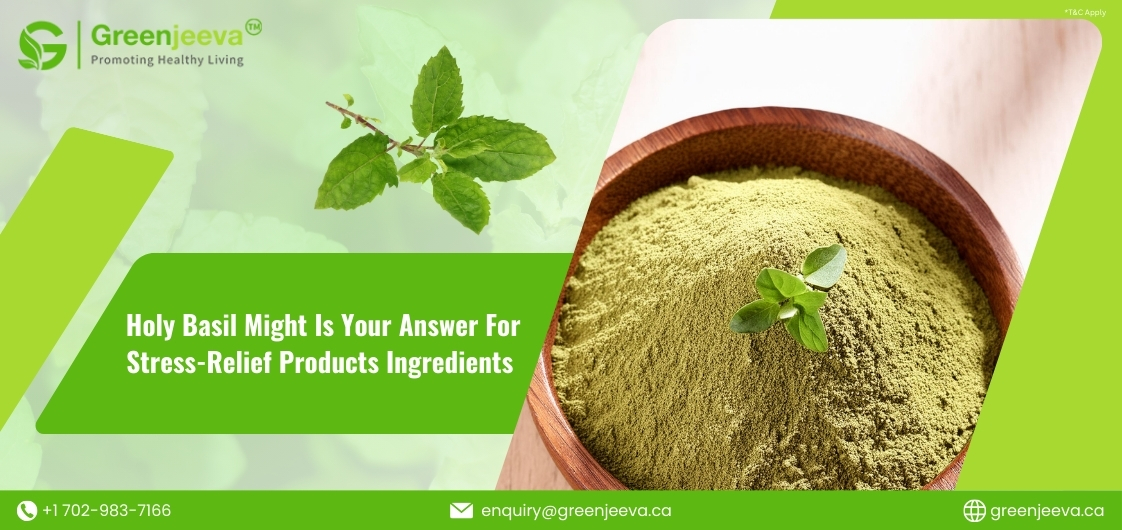
Holy basil extract powder is a concentrated botanical ingredient made from holy basil, also called tulsi, from the plant Ocimum sanctum, also known as Ocimum tenuiflorum. It is produced by extracting the leaf and drying it into a standardized powder. Manufacturers use it as a herbal ingredient in supplements, functional beverages, and foods. Any finished-product claim is the manufacturer's responsibility to substantiate.
The key thing is extract. Rather than simply milling the dried leaf, an extract concentrates the plant and is often standardized to a defined ratio or marker. As a result, holy basil extract powder is chosen when a buyer wants a concentrated, consistent botanical rather than a whole-leaf powder.
Understanding the 10 to 1 Extract Ratio
A 10 to 1 holy basil extract means roughly ten parts of raw holy basil are used to produce one part of the finished extract. It is a concentration descriptor, not a potency or benefit claim. The ratio tells you how concentrated the material is relative to the starting herb, which helps formulators compare grades and set dosing.
Read the ratio alongside the rest of the specification rather than on its own, because the extraction method and solvent also shape the finished material. Therefore, ask what the ratio is measured against and how the extract was produced. A clear ratio plus a clear method is what lets a QA team compare two suppliers fairly.
Extract Powder vs Whole-Leaf Tulsi Powder
Holy basil extract powder and whole-leaf tulsi powder are different ingredients. Extract powder is concentrated and often standardized, which suits compact dosing in capsules and defined formulas. Whole-leaf tulsi powder is the milled herb, which suits teas and whole-herb labels. Both are valid, and the right choice depends on the format and the label.

Reading a Holy Basil Extract Specification and COA
A useful holy basil extract powder specification states the botanical name, the plant part, the extract ratio, the extraction method, the particle size, the moisture level, and the microbial and heavy metal limits. The certificate of analysis confirms identity and these results for each lot. For any imported botanical, identity testing and contaminant limits are the priority checks.
Botanical identity matters because leaf material can be adulterated or mislabeled, so confirm the material is genuinely Ocimum sanctum. In addition, review the heavy metal and microbial results, since these are common concerns for imported herbs. Green Jeeva provides a full COA with each lot, so these checks are documented rather than assumed.
Formats Manufacturers Use Holy Basil Extract Powder In
Manufacturers use holy basil extract powder in capsules, tablets, herbal supplement blends, functional beverages, teas and drink mixes, and some food formats. It is often included in botanical blends positioned by the brand around a wellness theme. The format determines whether an extract or a whole-leaf powder is the better fit.
In capsules and tablets, the concentrated extract suits compact dosing. In beverages and teas, both extract and leaf are used, depending on the flavor and the label. Because holy basil has a distinct herbal flavor, test the taste in the finished format, especially in lightly flavored drinks. The finished-product positioning and any claim are set by the manufacturer.
A Note on Category Positioning
Holy basil, or tulsi, is widely used by manufacturers in the adaptogenic and botanical wellness category. Green Jeeva supplies the ingredient with documentation and does not make health claims on its behalf. Any structure-function or wellness claim on a finished product is the manufacturer's responsibility and must be substantiated and compliant in the target market.
This is the important compliance point for this ingredient. Buyers position their finished products, and they own the evidence behind any claim they make. Our role is to supply a well-documented, traceable, standardized extract so that the manufacturer can build and substantiate its own positioning.
How Green Jeeva Sources and Tests Holy Basil Extract in Canada
As a holy basil extract powder supplier in Canada, Green Jeeva confirms the source and any organic certification, tests each lot for botanical identity, the extract specification, purity, heavy metals, and microbial limits, and issues a certificate of analysis with every shipment. Each lot stays traceable from the grower to the finished pack.
For an imported botanical extract, identity and contaminant testing are the core of the work, not an afterthought. Because the COA travels with the shipment, buyers can confirm the material against their specification on arrival. In this way, QA teams complete supplier validation and audit readiness without chasing missing data.
Source Bulk Holy Basil Extract Powder in Canada
You can source bulk holy basil extract powder, including organic and 10-to-1 grades, from Green Jeeva in Canada with full documentation. On the product page you can view stock, the pricing structure, compliance documents, MOQ, and pack size. To move forward, request a free sample and a quotation, and the team will match the right grade and specification.
Ready to source bulk holy basil extract powder in Canada?
View stock, the pricing structure, compliance documents, MOQ, and pack size on the product page, then request a free sample, a COA, and a quotation.