Organic Dandelion Root Powder for Cosmetic and Personal Care Formulation in Canada
Summary, the quick version
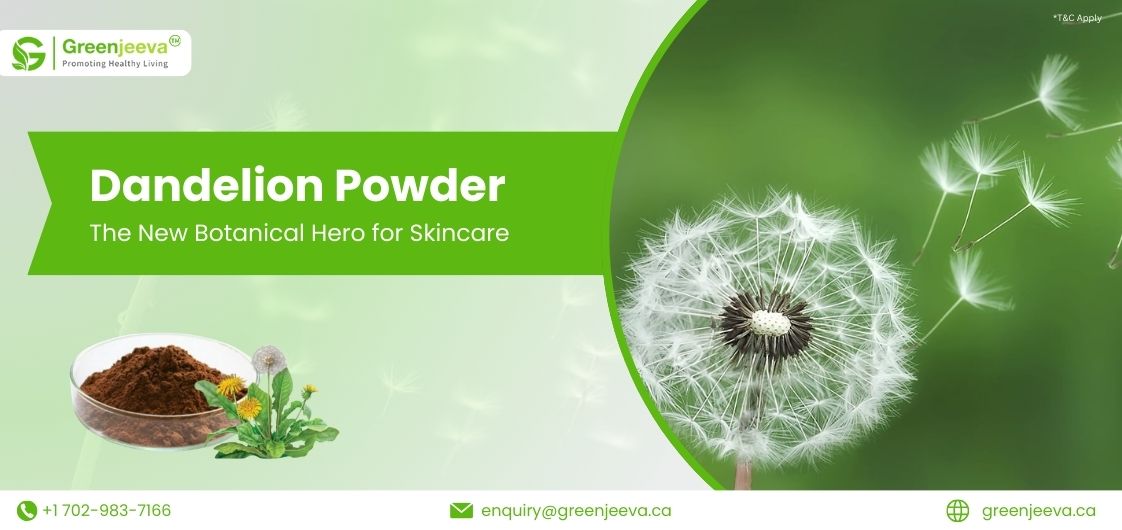
Nearly everyone has blown the seed head off a dandelion as a kid, long before it was ever a cosmetic ingredient.
Organic dandelion root powder is milled from the root of Taraxacum officinale, and a 4:1 root extract is also available for a more concentrated grade.
The root is the plant part used for both products, distinct from dandelion leaf, so confirming the plant part on any specification matters.
Green Jeeva Canada supplies both grades with a 1kg minimum order, Halal, Kosher, and Organic certified, manufactured in an FDA registered facility.
Request a free sample and place a bulk order quotation on the website, with dispatch from the Surrey and Pantos warehouses in Canada.
Everyone knows a dandelion on sight, the bright yellow flower, the puffball seed head every kid has made a wish on and blown apart. It is one of the most recognisable plants there is, and for most of its history it was treated as a weed rather than an ingredient. That has changed, and dandelion, particularly the root, now shows up as a genuine raw material in cosmetic and personal care formulation.
This guide is written for cosmetic and personal care manufacturers in Canada sourcing organic dandelion root powder and root extract. It covers which plant part isactually used, the difference between the powder and the standardized 4:1 extract, where each grade fits in a formulation, and what a specification should confirm, without describing any effect on the skin, since that remains the manufacturer's responsibility to substantiate.
Root, Not Leaf, Is the Plant Part Used Here
Dandelion is a whole plant with distinct parts, and the root and the leaf are not interchangeable as cosmetic raw materials. Both Green Jeeva Canada products described in this guide, the root powder and the 4:1 root extract, use the root specifically, not the leaf.
This distinction matters more than it might seem. The root and the leaf come from the same plant, but they are different plant parts with different compositions, and a specification or an INCI declaration should name the part used precisely rather than referring generically to dandelion. If a formula or a label calls for dandelion leaf, a root-based ingredient is not a direct substitute, and the reverse is equally true. Always confirm the plant part in writing before you approve a batch and treat any supplier documentation that simply says dandelion without a plant part as incomplete.
Dandelion Root Powder vs the 4:1 Root Extract
Organic dandelion root powder is the dried, milled whole root, carrying the root's natural composition at its unconcentrated level. The 4:1 root extract is concentrated from the same root, meaning roughly 4 parts of raw root produce 1 part of finished extract, giving a more concentrated material in a smaller weight.
Neither grade is inherently better than the other. A brand building a whole-botanical, minimally processed formulation typically reaches for the root powder, while a formulation that needs a more concentrated root material in a smaller inclusion level often calls for the 4:1 extract. Confirm which grade your formula actually needs before you place an order, since the two are not interchangeable on a one-to-one basis.

Where Dandelion Root Powder Is Used in Formulations
As a plant-based, single ingredient botanical, organic dandelion root powder fits formats where a brand wants a recognisable, whole-root ingredient on the label. Green Jeeva supplies the raw material, and any claim about what the finished product does for the skin is the manufacturer's responsibility to substantiate.
Powder-to-paste face masks, mixed with water or another liquid before use.
Cleansing formulations, where it can be included as a botanical component.
Physical exfoliating products, where the milled texture provides a mechanical exfoliating action.
Botanical and clean-label personal care ranges more broadly.
Because it is a single ingredient with no additives, dandelion root powder suits a clean label ingredient list where a short, recognizable declaration matters to the brand. The extract earns its place in a slightly different set of formats, worth looking at separately.
Where the 4:1 Root Extract Fits Differently
The organic dandelion root extract powder 4:1 concentrated suits formats where a smaller inclusion level needs to carry more of the root's material, which the whole powder cannot do as efficiently. This makes it a better fit for certain liquid and semi-concentrated formats than the unconcentrated powder.
Serums and liquid formulations, where a concentrated botanical input works better than a bulkier whole-herb powder.
Formulations with a tight total botanical inclusion budget, where the extract delivers more root material per gram used.
Products where a defined extraction ratio on the label supports a more technical, standardization-led ingredient story.
As with the powder, any statement about what the extract does for the skin remains a claim for the manufacturer to substantiate. The distinction here is purely about format and concentration, not about one grade being a stronger or more effective version of the other. Choosing between them is really a formulation decision, driven by your target inclusion level and the physical form your product needs, rather than a judgement about which raw material is inherently superior.
Cosmetic Labelling and the INCI Name
On a cosmetic ingredient list, dandelion root powder or extract is declared using its INCI name, based on the botanical identity Taraxacum officinale and the plant part used, the root. Getting the plant part and the botanical name right on the label is a straight forward but important detail that ties directly back to the specification.
Because this is a genus and species with more than one commonly used plant part, confirm the exact INCI declaration for the specific grade you are using with your regulatory team before finalizing a label, rather than assuming a generic dandelion reference will suffice.
What the Specification Tells You, Used Strategically
Both the dandelion root powder and the 4:1 root extract come with a defined specification. Rather than reproducing the full sheet, these are the points that actually matter when you are qualifying a dandelion root powder supplier.
Botanical identity Taraxacum officinale, with the root confirmed as the plant part on both grades.
For the extract, the 4:1 ratio confirmed by TLC gives you a defined concentration basis to compare suppliers on.
Mesh size and color, which affect texture and consistency in a cosmetic formulation.
Heavy metals and a full microbiological panel tested by USP methods, appropriate for a cosmetic raw material.
A 36-month shelf life when the material is stored correctly, in a well-closed container away from heat, moisture, and dust.
The complete specification and certificate of analysis are available after registration on the website. Reviewing the certificate of analysis for the specific lot you receive remains the final check before you formulate, and it is worth confirming the extraction ratio figure specifically if you have ordered the 4:1 grade, since that number is what your dosing calculations should be built around.
Sourcing Organic Dandelion Root Powder and Extract from Green Jeeva Canada
Green Jeeva Canada supplies both the root powder and the 4:1 root extract for cosmetic and personal care manufacturing, tested and documented. Here is what a procurement team needs to know.
Organic dandelion root powder and organic dandelion root extract 4:1, both from Taraxacum officinale root.
Halal, kosher, and organic certified, manufactured in an FDA-registered facility.
Heavy metals and microbiology tested by USP methods, with a certificate of analysis for each lot.
Minimum order quantity of 1 kg across both grades.
A free sample is available, and a bulk order quotation can be placed on the website.
Stock ships from the Surrey and Pantos warehouses in Canada, and documents download after registration.
If you are building a wider botanical cosmetic range, dandelion pairs naturally with other plant-based ingredients such as organic aloe vera leaf powder, available through the same sourcing process.
Ready to source organic dandelion root powder or extract in Canada?
View stock, the pricing structure, compliance documents, MOQ, and pack size on the website, request a free sample, and place a bulk order quotation with Green Jeeva Canada.
Organic dandelion root powder and root extract are supplied by Green Jeeva Canada as raw ingredients for cosmetic and personal care manufacturing. Finished product claims, including any claim about the effect on skin, should be verified and substantiated by the manufacturer and comply with applicable regulations in the target market. This article is written by the Green Jeeva Canada QA and RA team for sourcing and formulation guidance.