Green Coffee Bean Extract vs Roasted Coffee, a B2B Sourcing Guide for Canada
Summary, the quick version
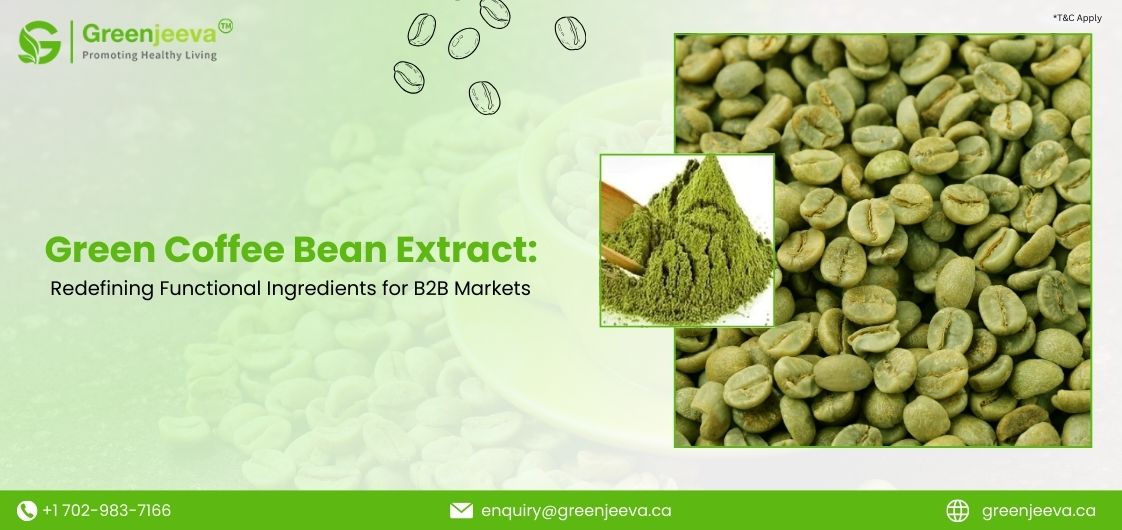
Green coffee beans are simply coffee beans that have not been roasted, and that single fact changes their chemistry in a real, measurable way.
Roasting drives off a large share of the chlorogenic acids naturally present in the raw bean, which is why an unroasted extract carries far more of this polyphenol than roasted coffee does.
The Green Jeeva Canada extract is standardized to 50 percent chlorogenic acid, giving formulators a defined figure to dose against.
Caffeine content varies by extraction and processing, so it should always be confirmed on the certificate of analysis rather than assumed.
Supplied in a 1kg pack with a 1kg minimum order. Request a free sample and place a bulk order quotation on the website, with dispatch from the Surrey and Pantos warehouses in Canada.
Most people only ever encounter coffee after it has been roasted, ground, and brewed, so it is easy to forget that the bean starts out as something quite different, pale, dense, and almost grassy in smell. That unroasted bean is where green coffee bean extract comes from, and the difference is not just cosmetic. Roasting is a real chemical process, and it changes what is actually in the bean.
This guide is written for supplement, functional beverage, and nutraceutical manufacturers in Canada who are sourcing green coffee bean extract powder. It focuses on what roasting actually does to the bean's chemistry, what standardization to chlorogenic acid means, and how to specify and source the ingredient, withoutdescribing any effect it may have on the person consuming the finished product, since that is a claim the manufacturer needs to substantiate.
What Green Coffee Bean Extract Actually Is
Green coffee bean extract is made from unroasted coffee beans, typically Coffea arabica or Coffeacanephora, extracted and often standardized to a defined chlorogenic acid content. Because it skips the roasting step entirely, it is a genuinely different raw material from a roasted coffee extract, not simply a lighter version of the same thing.
The species matters on a specification the same way it would for any botanical. Coffea arabica and Coffeacanephora, more commonly known as robusta, have somewhat different natural compositions, so the species used should be stated clearly rather than left as a generic reference to coffee.
What Roasting Actually Does to Chlorogenic Acid
Chlorogenic acid is a polyphenol found naturally in coffee beans at its highest levels before roasting. The roasting process, which involves high heat over time, breaks down a significant portion of the chlorogenic acid naturally present in the bean. This is a well-documented effect of the roasting process itself, not a claim about the finished extract.
That is the entire reason green coffee bean extract and roasted coffee are treated as different raw materials in a specification, even though they start from the same plant. An unroasted bean simply retains more of its original chlorogenic acid content than a roasted one does, because the compound has not been exposed to the heat that degrades it. This is a compositional fact about the raw material, confirmed by assay, and it is the basis for standardizing an extract to a defined chlorogenic acid percentage.
Standardization to Chlorogenic Acid, and Why the Percentage Matters
A standardized green coffee bean extract states a defined chlorogenic acid percentage, commonly confirmed by HPLC, which is the figure a formulator uses to dose consistently and compare one extract against another. The Green Jeeva Canada extract is standardized to 50 percent chlorogenic acid.
As with any standardized botanical extract, the percentage only means something alongside the test method used to confirm it. When you compare suppliers, ask for both the chlorogenic acid figure and the assay method, and treat a number without a stated method as incomplete. This is the same principle that applies to any marker compound standardization, whether that is ellagic acid in pomegranate orwithanolidesin ashwagandha, and it applies just as directly here. There is one more step in the process worth understanding, since it also affects the figure on your specification.
How the Extraction Step Shapes the Final Chlorogenic Acid Level
Getting from an unroasted bean to a standardized extract involves an extraction step, typically using water or a food-grade solvent to pull the soluble compounds, including chlorogenic acid, out of the raw material. How that extraction is done, and how it is subsequently concentrated, is what allows a supplier to reach a defined percentage such as 50 percent rather than simply reporting whatever level occurs naturally in the raw bean.
This matters for a sourcing decision because two suppliers using different extraction and concentration methods can arrive at the same stated percentage while producing materials that behave slightly differently in a formula, in solubility, colour, or flavour carryover. It is another reason the extraction method belongs on a thorough specification alongside the chlorogenic acid figure itself, rather than being treated as a detail that does not matter once the headline number is confirmed.
What About Caffeine Content?
Green coffee beans naturally contain caffeine, and roasting does not remove most of it, so it is not accurate to assume an unroasted extract is automatically low in caffeine. Actual caffeine content depends on the specific extraction and processing method used, and it should always be confirmed on the certificate of analysis rather than assumed from the fact that the beans were not roasted.
If caffeine content matters to your formulation, whether you need it present at a certain level or specifically reduced, ask the supplier for the confirmed caffeine figure on the specification. This is a straightforward analytical question with a straightforward answer, and it should never be inferred from marketing language alone.
Where Green Coffee Bean Extract Is Used
Green coffee bean extract appears across nutraceutical, functional beverage, and food formats, valued as a standardized botanical ingredient with a defined chlorogenic acid content. Green Jeeva supplies the raw material, and the manufacturer owns any claim on the finished product.
Common formats where the extract appears include the following.
Capsules and tablets in nutraceutical formulations.
Functional beverages and beverage premixes.
Powder blends alongside other standardized botanical extracts.
Because it is plant-derived and comes with a defined, testable specification, green coffee bean extract fits clean-label botanical formulations where a manufacturer wants a documented ingredient with a clear identity rather than a proprietary blend.
What to Confirm on a Green Coffee Bean Extract Specification
A complete specification for this ingredient covers identity, standardization, and safety testing, the same categories that matter for any standardized botanical extract. Confirm each of these before you approve a supplier.
Botanical species, Coffea arabica or Coffeacanephora, stated clearly rather than left generic.
Chlorogenic acid percentage with the assay method stated, typically HPLC.
Caffeine content, confirmed by assay rather than assumed.
Heavy metal and microbiological limits with test methods.
Allergen and non-GMO status.
Traceability to the source, so the paperwork ties to the specific lot.
Writing these into your purchase specification gives your QA team a clear pass or fail at goods-in and makes comparing suppliers a matter of comparing documented figures rather than marketing claims.
Sourcing Green Coffee Bean Extract Powder from Green Jeeva Canada
Green Jeeva Canada supplies green coffee bean extract standardized to 50 percent chlorogenic acid, tested and documented for nutraceutical and functional beverage manufacturers. Here is what a procurement team needs to know.
Standardized to 50 percent chlorogenic acid, with the assay method confirmed on the certificate of analysis.
Pack size and minimum order quantity are both 1 kg.
Green Jeeva Canada is COR, FDA, Halal, Kosher, GMA, and CFIA certified, and the material is fully traceable.
Heavy metals and microbiology are tested by USP methods, with a certificate of analysis for each lot.
A free sample is available, and a bulk order quotation can be placed on the website.
Stock ships from the Surrey and Pantos warehouses in Canada, and documents download after registration.
Review the certificate of analysis for the specific lot before you formulate, and confirm the chlorogenic acid and caffeine figures against your own formulation requirements. A supplier that can answer both questions clearly, with numbers rather than general assurances, is usually the more reliable one to build a long-term supply relationship with.
Ready to source green coffee bean extract powder in Canada?
View stock, the pricing structure, compliance documents, MOQ, and pack size on the website, request a free sample, and place a bulk order quotation with Green Jeeva Canada.
Green coffee bean extract powder is supplied by Green Jeeva Canada as a raw ingredient for food, beverage, and dietary supplement manufacturing. Finished product claims, including any claim about weight, metabolism, or other health effects, should be independently verified and substantiated by the manufacturer and comply with applicable regulations in the target market. This article is written by the Green Jeeva Canada QA and RA team for sourcing and formulation guidance.