
How Sprouting Changes Green Pea Powder: A Guide for Ingredient Buyers
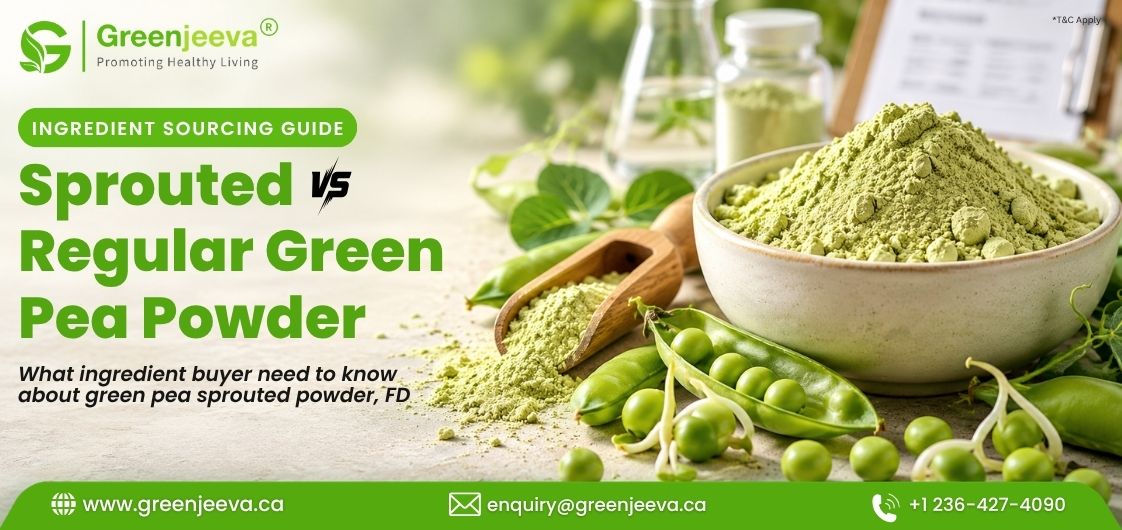
When comparing plant-based ingredients, two powders can start with the same raw material yet have very different processing profiles. Green Pea Sprouted Powder, FD is one example.
While conventional green pea powder is generally produced by drying and milling peas, sprouted green pea powder begins with an additional step: controlled sprouting before the material is dried and processed. When freeze-drying is used, the resulting ingredient has another important processing characteristic to consider.
For ingredient buyers, the distinction is not simply about the word “sprouted.” The more important questions are: How was the pea processed? What specifications does the finished powder meet? And can the supplier provide the documentation needed for formulation and quality review?
What Is Green Pea Sprouted Powder, FD?
Green pea sprouted powder, FD is produced from green peas that undergo a controlled sprouting stage before being processed into powder. “FD” refers to freeze-dried, meaning the material is dried through a process in which frozen water is removed under controlled conditions.
This creates a different ingredient pathway from standard green pea powder.
A conventional green pea powder may follow a relatively straightforward sequence:
Green peas → drying → milling → sieving → packaging
A Green pea sprouted powder, FD ingredient adds another stage:
Green peas → controlled sprouting → freeze-drying → milling → sieving → packaging
The additional processing step means buyers should evaluate the ingredient based on more than its name or product description.

How Does Sprouting Change the Ingredient?
The most important difference is the processing pathway.
During sprouting, seeds are allowed to begin germination under controlled conditions. For an ingredient manufacturer, this introduces additional variables that need to be controlled and documented.
These may include:
- Raw material identity and origin
- Sprouting conditions
- Processing time
- Drying method
- Moisture or loss on drying
- Microbiological specifications
- Particle size or mesh
- Batch consistency
- Packaging and storage conditions
This is why a sprouted pea ingredient should not automatically be treated as interchangeable with conventional green pea powder.
The two materials may have different processing specifications even though both originate from green peas.
Sprouted Green Pea Powder vs Regular Green Pea Powder
The easiest way to understand the difference is to compare the production and sourcing considerations.
The key takeaway is that sprouted pea powder and conventional pea powder should be evaluated as separate ingredient specifications, rather than assumed to be equivalent substitutes.
Why Freeze-Drying Matters
The “FD” in freeze-dried pea powder is an important part of the product description.
Freeze-drying is a distinct drying approach from conventional hot-air drying. The process involves freezing the material and removing water under controlled conditions.
For buyers, the relevant question is not whether freeze-drying is automatically “better.” Instead, it is whether the drying method is appropriate for the intended application and whether the supplier can consistently meet the required specifications.
When evaluating a freeze-dried green pea ingredient, procurement and R&D teams can ask suppliers for:
- Drying method
- Moisture or loss-on-drying specification
- Particle size
- Appearance and color specification
- Microbiological limits
- Packaging format
- Storage requirements
- Batch-specific Certificate of Analysis (CoA)
This information helps distinguish a technically suitable ingredient from one that simply matches a product name.
What Ingredient Buyers Should Check Before Purchasing
For companies evaluating bulk green pea sprouted powder Canada, the purchasing process should begin with a specification checklist rather than a price comparison.
- Confirm the botanical and material identity
Ask the supplier to clearly identify the raw material used to manufacture the powder. If the ingredient is described as a green pea seed powder, clarify whether it is made from unsprouted peas or sprouted peas.
- Understand the sprouting process
Ask whether the supplier can provide basic information about the controlled sprouting process.
You may not need proprietary manufacturing details, but you should understand what processing steps are part of the finished ingredient.
- Confirm the drying method
If freeze-drying is a requirement, confirm that the material supplied is actually freeze-dried rather than a conventionally dried pea powder.
- Review the specification sheet
Before approving a supplier, compare the product specification with your internal requirements.
Important parameters can include:
- Moisture
- Particle size/mesh
- Microbiological limits
- Heavy metals, where applicable
- Pesticide requirements, where applicable
- Allergen information
- Appearance
- Packaging
- Shelf life
- Storage conditions
- Request a recent CoA
A specification sheet explains the target requirements. A batch-specific CoA provides testing information for a particular lot.
For R&D and quality teams, reviewing a recent CoA can provide a clearer picture of how the supplied material aligns with the agreed specifications.
When the Difference Matters
Imagine a food manufacturer is developing a powdered plant-based formulation.
The R&D team initially specifies conventional green pea powder based on its expected processing characteristics. During supplier evaluation, another vendor proposes a freeze-dried pea powder made from sprouted peas.
The product names sound similar, but the ingredients should not be approved simply because both are derived from green peas.
The team should compare:
Raw material → sprouting process → drying method → particle size → moisture → microbial specifications → documentation → application requirements
If the formulation requires a specific particle size or moisture range, those parameters should be confirmed against the actual specification of the sprouted ingredient.
This simple comparison can prevent an ingredient substitution from becoming a formulation or quality issue later.
Sourcing Sprouted Pea Powder in Canada
For Canadian manufacturers looking for a Green pea powder supplier Canada, sourcing should involve both ingredient fit and supply chain requirements.
When evaluating a green pea sprouted powder supplier in Canada, consider asking:
- Is the material available in bulk quantities?
- Is the product consistently supplied to the same specification?
- Can the supplier provide recent CoAs?
- What documentation accompanies each batch?
- What packaging sizes are available?
- What is the minimum order quantity?
- What is the typical lead time?
- Where is the material stocked or shipped from?
- Are samples available for R&D evaluation?
- Can the supplier support ongoing commercial quantities?
For manufacturers, these questions are particularly relevant when moving from sample testing to production-scale purchasing.
A supplier may offer bulk sprouted pea powder for food manufacturers, but the practical value depends on whether the supplier can maintain agreed specifications and provide the required documentation across repeat orders.
A More Useful Way to Compare Pea Powders
One common sourcing mistake is comparing ingredients primarily by price per kilogram.
A better approach is to compare cost against specification, processing, documentation, and supply requirements.
For example:
Supplier A: Conventional green pea powder, lower price, standard drying process.
Supplier B: Sprouted green pea powder, freeze-dried, different moisture and particle-size specifications, additional processing documentation.
These are not necessarily equivalent products. The appropriate choice depends on the formulation and purchasing specification.
This is why procurement teams should establish a technical specification before requesting multiple supplier quotations.
Actionable Takeaway for Ingredient Buyers
The difference between conventional green pea powder and Green Pea Sprouted Powder, FD starts with processing, but sourcing decisions should go further.
For procurement and R&D teams, the practical approach is to evaluate the complete ingredient profile:
Raw material identity + sprouting process + drying method + specifications + testing + documentation + supply capability
If you are sourcing bulk green pea sprouted powder Canada, don't rely on the product name alone. Ask for the technical documentation, compare the specification with your formulation requirements, and test the material before moving to larger commercial quantities.
For manufacturers considering a freeze dried green pea powder for formulations, this approach can help create a clearer supplier qualification process and reduce confusion between ingredients that may appear similar but are processed differently.