ACV Powder: The Clean-Label Ingredient Quietly Changing Snacks and Drinks
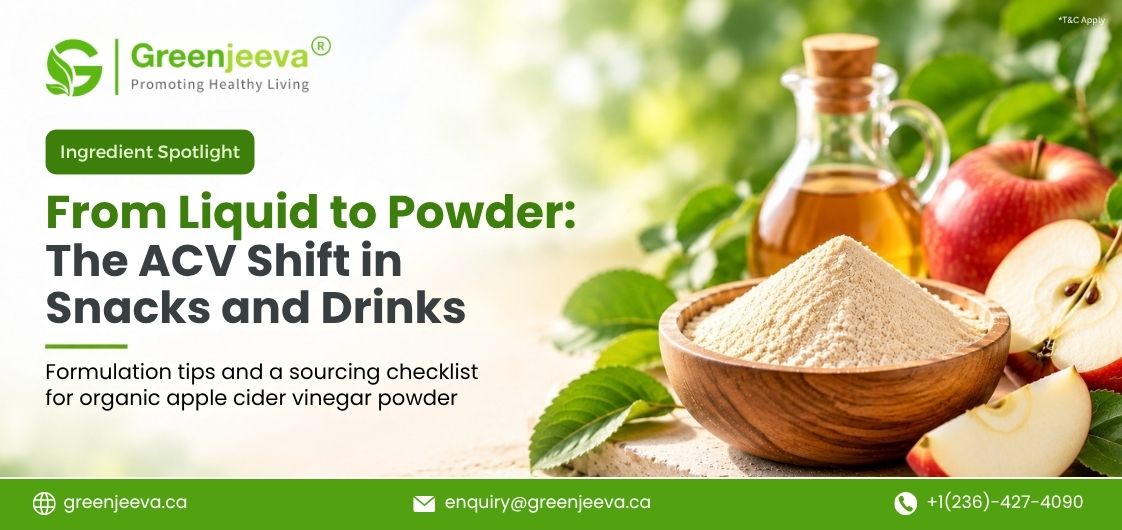
Walk down any snack aisle in Canada and you will spot it on more labels every season: apple cider vinegar powder. It shows up in kettle chips, roasted chickpeas, drink sticks and seasoning blends, often listed quietly near the end of the ingredient panel.
The reason is practical, not trendy. Food and beverage developers want the sharp, fruity tang of apple cider vinegar, but liquid vinegar is awkward to handle in dry products. A free-flowing powder solves that problem while keeping the ingredient list short and recognisable.
This guide is written for product developers, R&D teams and procurement managers. It explains what apple cider vinegar powder is, why formulators are moving from liquid to powder, where it works best in snacks and drinks, and what to check when sourcing bulk organic apple cider vinegar powder for production in Canada.
What is apple cider vinegar powder?
Apple cider vinegar powder is apple cider vinegar converted into a dry, shelf-stable form. It starts with apples (Malus pumila) that are crushed, juiced and fermented, first into cider and then into vinegar. The liquid vinegar is then dried into a fine powder that can be weighed, blended and stored like any other dry ingredient.
The flavour comes mainly from acetic acid, the defining component of all vinegar. Apple cider vinegar also carries smaller amounts of other organic acids, such as malic, citric and lactic acid, which give it a rounder, fruitier sourness than plain white vinegar.
A typical production flow looks like this:
- Fermentation: Apple juice is fermented into hard cider, then into vinegar by acetic acid bacteria.
- Blending: The vinegar is usually combined with a food-grade carrier, such as maltodextrin, tapioca dextrin or gum arabic, which helps it hold its shape as a powder.
- Drying: The blend is spray-dried or otherwise dried to remove moisture.
- Sizing and packing: The powder is milled or sieved to a consistent particle size, tested and packed in moisture-proof bags.
For organic apple cider vinegar powder, every input matters. The apples, the vinegar and the carrier all need to come from certified organic sources, and the whole chain needs documentation to prove it.
Why formulators are moving from liquid ACV to powder
Liquid vinegar works well in dressings and sauces. In dry or low-moisture products, it creates problems. Adding liquid to a seasoning blend causes clumping, and adding it to a snack can soften texture or shorten shelf life.
Apple cider vinegar powder removes those issues. Here is how the two formats compare on a production line:

For procurement teams, the powder format also simplifies logistics. Buying bulk apple cider vinegar as a powder means fewer pallets, lower freight weight and no risk of drum leakage in transit. That matters for Canadian manufacturers shipping across long distances and cold winters, where liquid freezing is a real concern.
How ACV powder is changing snacks
In snacks, apple cider vinegar powder is mainly a flavour tool. It delivers tang and brightness that balance salt, fat and spice, which is why it has become a go-to for developers building bolder savoury profiles.
Common snack applications include:
- Salt and vinegar chips: The classic use. ACV powder gives a softer, fruitier sourness than distilled vinegar powder, which suits premium and kettle-cooked lines.
- Popcorn and puffed snacks: It sticks well with oil-based seasoning slurries and spreads evenly across large surfaces.
- Roasted nuts, seeds and chickpeas: It pairs well with rosemary, black pepper, chilli and garlic.
- Crackers and pretzels: It can be added to dough or dusted on top to lift a plain base.
- Plant-based jerky and meat alternatives: A small amount adds a cured, tangy note without liquid marinades.
Formulation tip: Start with low inclusion levels in a topical seasoning and adjust after tasting. ACV powder is easy to overdo, and sourness intensifies once the seasoning dissolves on the tongue. Because carriers and acidity vary between suppliers, always run trials with a sample from the same supplier you plan to buy in bulk from.
How ACV powder is changing drinks
Beverage brands like apple cider vinegar for its crisp, tart character, which works in the same way citrus does to brighten a drink. Powder makes that flavour portable and easy to dose.
Where it fits in beverages:
- Powdered drink mixes and stick packs: Consumers stir a single serve into water. Powder is the only practical format here.
- Switchel and shrub-style drinks: These old farmhouse recipes combine vinegar, ginger and a sweetener. Powder lets brands sell them as dry mixes.
- Sparkling and flavoured waters: A small amount adds tartness and complexity to fruit flavours such as apple, cranberry and berry.
- Tea and wellness-style blends: It pairs well with ginger, cinnamon, lemon and honey flavours in instant formats.
- Mocktail and mixer bases: It provides a sour backbone for non-alcoholic drinks.
Formulation tip: Check solubility and clarity early. Depending on the carrier, some ACV powders dissolve clear while others leave slight haze. Ask your supplier for a solubility note and test in your actual water hardness and temperature before scaling up.
Why it counts as a clean-label ingredient
Clean label has no single legal definition, but most brands use it to mean short ingredient lists made of things shoppers recognise. Apple cider vinegar fits that brief. Most consumers already know it from their own kitchen.
That familiarity gives developers a practical advantage. ACV powder can deliver acidity and tang in places where a formulator might otherwise reach for synthetic acidulants or flavour enhancers with less familiar names.
To keep the label genuinely clean, pay attention to three details:
- The carrier: It appears on the ingredient list, so choose one your brand is comfortable declaring. An organic tapioca or gum arabic carrier may suit your positioning better than others.
- Organic status: Choosing organic apple cider vinegar powder lets you keep an organic claim on the finished product, provided the rest of the formula qualifies.
- Allergen and dietary status: Confirm the powder is free from major allergens and check for Halal and Kosher certification if your retail customers require it.
For Canadian brands, organic claims fall under the Canada Organic Regime (COR), overseen by the Canadian Food Inspection Agency. If you plan to use the Canada Organic logo, your supplier's ingredient must be certified to the Canadian organic standard or an equivalent standard recognised under COR.
Buyer's checklist for bulk organic apple cider vinegar powder
Not all ACV powders perform the same. Acidity, carrier type, particle size and moisture all vary between suppliers, and each one affects taste, flow and shelf life. Before you approve a supplier of bulk organic apple cider vinegar powder, ask for the following:

Two practical habits make a big difference. First, always test a pre-shipment sample from the actual production lot. Second, store the powder sealed, cool and dry once opened. ACV powder is hygroscopic, meaning it pulls moisture from the air, and it can clump in humid conditions.
Working with a supplier based in Canada also helps. Local stock shortens lead times, reduces customs paperwork and makes it easier to resolve quality questions quickly.
The quiet shift is here to stay
Apple cider vinegar powder is not a flashy ingredient, and that is exactly its strength. It gives snack and beverage developers a familiar flavour in a format that is easier to dose, store and ship, while keeping ingredient lists short and recognisable.
As more brands rework their formulas around clean-label and organic positioning, ACV powder is likely to keep moving from niche to standard pantry item in product development labs across Canada.
Ready to test it in your next formulation?
Green Jeeva supplies organic apple cider vinegar powder backed by COR, Halal and Kosher certifications, with stock in Canada. Register as a buyer to view specifications, request a sample or get a bulk quote.