Jerusalem Artichoke Powder vs Chicory Root Powder: Understanding Ingredient Formats for Better Sourcing Decisions
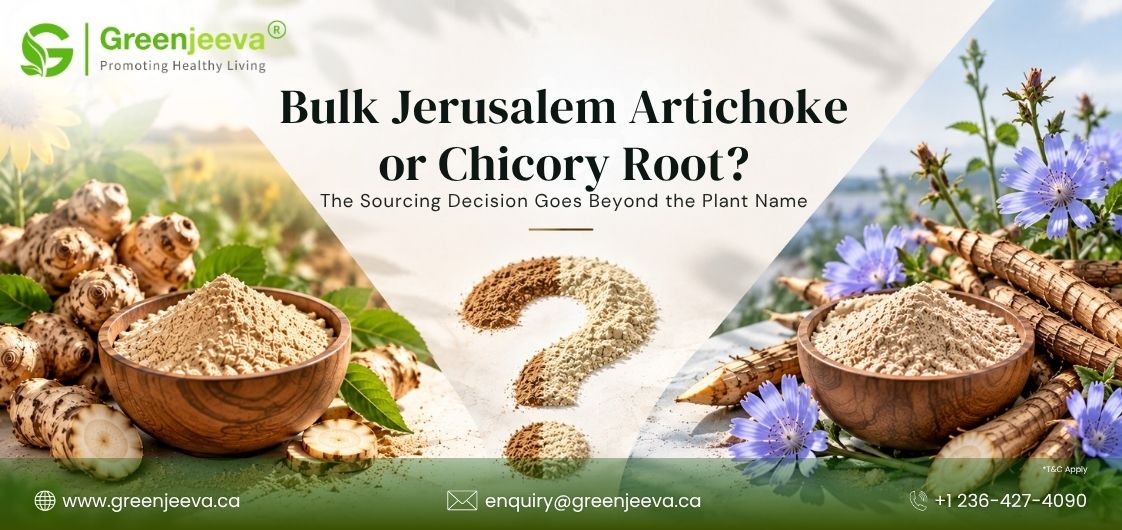
When sourcing plant-based ingredients containing inulin, buyers often compare Jerusalem artichoke powder and chicory root powder. Both ingredients appear frequently in ingredient catalogs, but they are not always interchangeable.
The key difference is not only the plant source, it is the ingredient format, specification, processing approach, and intended formulation requirement.
For manufacturers developing food, beverage, and clean-label formulations, selecting between Jerusalem artichoke and chicory root starts with understanding what type of ingredient is being purchased and how its specifications align with the final product requirements.
Jerusalem artichoke tubers and chicory roots are both recognized sources of naturally occurring inulin and fructan compounds used in ingredient applications.
Why Are Jerusalem Artichoke and Chicory Root Compared Together?
Both Jerusalem artichoke and chicory root are plant-based root ingredients associated with inulin sourcing. However, the commercial ingredient available from suppliers can vary significantly depending on whether it is supplied as a:
• Whole-root powder
• Standardized inulin ingredient
• Extract format
• Ingredient with defined specifications
A common sourcing mistake is comparing ingredients only by botanical name while overlooking important factors such as:
• Inulin specification
• Particle size
• Moisture level
• Sensory characteristics
• Documentation availability
• Certification requirements
For procurement teams, the ingredient format often matters as much as the plant source.
Jerusalem Artichoke Powder: Ingredient Overview
Jerusalem artichoke (Helianthus tuberosus) is a tuber-based ingredient commonly associated with naturally occurring inulin content.
Commercial Jerusalem artichoke ingredients may be supplied in different formats depending on supplier specifications and customer requirements.
Key sourcing considerations include:
• Reported inulin content
• Ingredient consistency
• Powder characteristics
• Moisture specification
• Certification documentation
For bulk buyers, reviewing the product specification sheet and Certificate of Analysis (CoA) is essential before selecting a material for formulation.
Chicory Root Powder: Ingredient Overview
Chicory root (Cichorium intybus) is another commonly used source for inulin-based ingredients.
Depending on the supplier and product format, chicory root may be available as:
• Whole-root powder
• Standardized inulin ingredient
Whole-root chicory powder maintains the natural characteristics of the root, while standardized formats are produced with defined specifications for ingredient consistency.
The right choice depends on the requirements of the finished product and the technical specifications needed by the manufacturer.
Standardized Inulin Ingredient vs Whole-Root Powder: What Is the Difference?
The primary difference between these formats is the level of specification control.
Standardized Inulin Ingredient
A standardized inulin ingredient is supplied with a defined inulin specification. Buyers typically select this format when they require:
• Consistent ingredient specifications
• Defined inulin content
• Predictable formulation performance
Whole-Root Powder
Whole-root powder represents the complete dried and milled plant material.
This format may be preferred when manufacturers are looking for:
• A minimally processed ingredient format
• Whole-root positioning
• Natural ingredient characteristics
Neither format is universally better. The correct choice depends on the formulation requirements, product specifications, and quality expectations.

What Should Buyers Review Before Ordering Bulk Ingredients?
Before selecting a Jerusalem artichoke or chicory root supplier, manufacturers should review:
1. Certificate of Analysis (CoA)
Confirm:
• Reported inulin content (where applicable)
• Moisture specification
• Microbial testing
• Heavy metal testing
2. Ingredient Specification Sheet
Review:
• Botanical identity
• Powder characteristics
• Particle size
• Storage requirements
3. Certification Documentation
Depending on product requirements, verify:
• Organic certification
• Non-GMO documentation
• Allergen statements
• Other applicable quality documents
4. Supplier Traceability
A reliable supplier should provide documentation related to:
• Ingredient origin
• Quality checks
• Batch information
• Supply consistency

Common Sourcing Mistakes When Comparing Jerusalem Artichoke and Chicory Root
Comparing Ingredients Only by Plant Name
Two ingredients from different suppliers may have different specifications even if they share the same botanical source.
Always compare the actual product documentation.
Assuming All Inulin Ingredients Are Identical
Inulin ingredients can differ based on:
• Source material
• Ingredient format
• Specification range
• Processing approach
Selecting Based Only on Price
The lowest-cost ingredient may not always match the required formulation specifications.
Review quality documentation and technical requirements before making a purchasing decision.
How Green Jeeva Supports Bulk Ingredient Sourcing
Green Jeeva works with manufacturers and brands looking for reliable ingredient sourcing solutions with documentation support and bulk availability.
For Jerusalem artichoke powder and chicory root powder requirements, buyers can evaluate:
• Ingredient specifications
• Quality documentation
• Certification availability
• Bulk supply options
Selecting the right ingredient starts with understanding the product format, reviewing documentation, and matching specifications with formulation needs.