Clean Label and Plant-Based Trends: Where XOS Fits in 2026
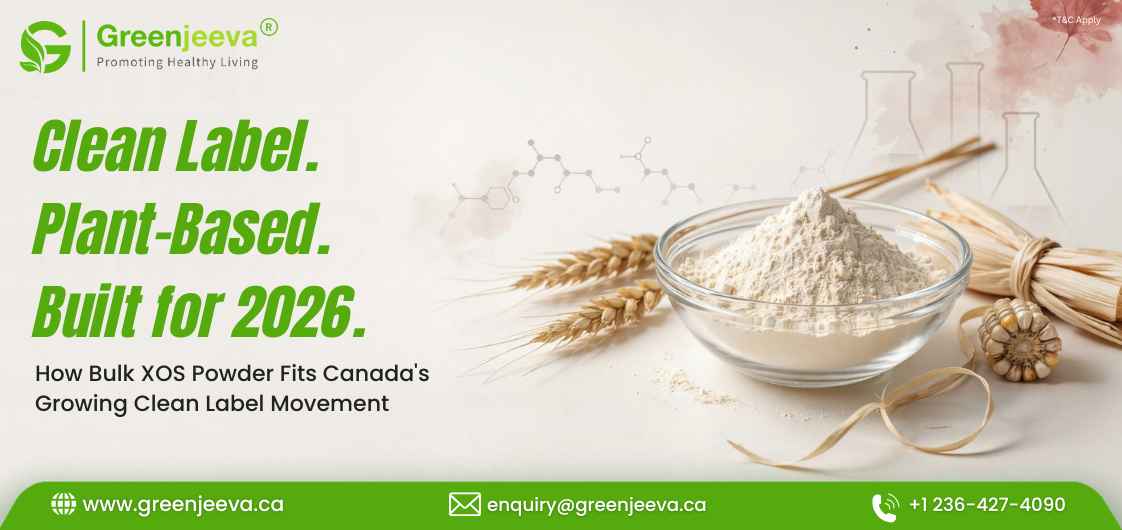
Walk down any Canadian grocery aisle in 2026 and the shift is obvious. Ingredient lists are shorter. "Plant-based" is no longer a niche shelf; it's a category expectation. And terms like "prebiotic fiber" now sit comfortably next to "protein" and "organic" on packaging that used to be reserved for basic nutrition facts.
This shift isn't cosmetic. It's reshaping how Canadian food, beverage, and supplement brands choose their ingredients and it's why bulk XOS powder is showing up in more formulations than ever. Here's a look at what's driving clean label ingredients in Canada and the broader plant-based fiber trends of 2026, and where an ingredient like XOS Powder 95% fits into that picture.
What "Clean Label" Actually Means to Canadian Consumers Now
"Clean label" doesn't have a single legal definition, but consumer expectations have converged around a few consistent ideas:
- Recognizable ingredients- Shoppers want to be able to read and understand what's in a product without needing a chemistry degree.
- Minimal processing claims- Ingredients derived through simple, well-documented processes are preferred over heavily synthesized alternatives.
- Traceability- Canadian buyers especially B2B formulators increasingly expect batch documentation, certificates of analysis (COA), and clear sourcing information as standard practice, not a premium add-on.
- Fewer, more functional ingredients- Products with shorter ingredient lists that still deliver on texture, shelf life, and formulation performance are winning shelf space.
For manufacturers, this means ingredient selection has become as much about the story an ingredient tells as its functional properties. An ingredient that is plant-derived, comes with clear certifications, and integrates into formulations without needing a dozen other additives to stabilize it, fits naturally into this new expectation.

The Plant-Based Category Has Matured Past "Alternative"
Plant-based used to mean substitution, a stand-in for dairy, meat, or egg. In 2026, plant-based ingredients are being chosen on their own merits, not just as a replacement for something else. One of the clearest plant-based fiber trends this year is the move toward fiber sources that double as functional, label-friendly ingredients rather than filler. This is particularly visible in:
- Bakery and snack products looking for plant-derived fiber sources that don't compromise texture.
- Beverages and RTD (ready-to-drink) products where solubility and stability across pH ranges matter.
- Nutraceuticals and powdered supplements where formulators want ingredients that are both plant-based and allergen-conscious.
- Pet nutrition, a category that has quietly adopted many of the same clean-label, plant-based sourcing standards as human food and supplements.
This maturity is why ingredient sourcing conversations in Canada now start with origin and processing method, not just cost per kilogram.
Where XOS Fits Into the Clean Label and Plant-Based Conversation
Xylooligosaccharides are produced from xylan-rich plant biomass, materials like corn cobs, sugarcane bagasse, and hardwood residues. That origin story checks several of the clean label boxes formulators are prioritizing right now:
Plant-derived origin- XOS is sourced from agricultural byproducts rather than synthetic processes, which aligns with the broader plant-based sourcing trend rather than working against it.
Certifications that matter to buyers- As a xylooligosaccharides powder supplier, Green Jeeva supplies its Xylooligosaccharides Powder 95% as Non-GMO, Kosher Certified, Allergen-Free, Nut-Free, Peanut-Free, and Cruelty-Free, the kind of certification stack that lets a formulator check multiple label claims with a single ingredient rather than sourcing separately certified inputs.
Formulation efficiency- Because XOS is used at relatively low inclusion rates, it can support fiber-forward or clean-label formulations without crowding out other ingredients or requiring extensive reformulation.
Documentation-first supply- For Canadian manufacturers, batch-level documentation and COAs aren't a bonus; they're often a procurement requirement. Ingredient suppliers who provide this by default make it easier for brands to maintain their own clean-label commitments down the supply chain.

Why Canadian Formulators Are Paying Closer Attention to Ingredient Sourcing
Interest in clean label ingredients in Canada isn't just a consumer-facing trend; it's changing how procurement teams evaluate suppliers. A few practical factors are pushing Canadian food, beverage, and supplement companies to scrutinize their ingredient sourcing more than they did even a couple of years ago:
- Retailer and buyer requirements- More Canadian retailers now request documentation on sourcing, allergen status, and non-GMO verification before listing a product.
- Private label and contract manufacturing growth- As more brands work with contract manufacturers, ingredient specifications need to travel cleanly across multiple parties, which favors well-documented, certified ingredients.
- Cross-border supply considerations- Canadian brands sourcing ingredients want suppliers who can reliably ship within Canada with consistent batch quality, reducing the friction of dealing with overseas documentation gaps.
- Formulation simplicity- Brands are trying to reduce the total number of functional additives in a product, which puts a premium on ingredients that can do more with less.
This is part of why bulk ingredient suppliers are increasingly positioning themselves around traceability and certification, not just price per kilogram.
Practical Considerations for Formulators Evaluating XOS
If you're a Canadian food, beverage, or supplement brand evaluating bulk XOS powder for a clean-label or plant-based reformulation, a few sourcing questions are worth asking upfront:
- What purity grade do you need? XOS is available in different purity levels (commonly in the 35%, 70%, and 95% ranges), and the right choice depends on your formulation's fiber and label targets.
- Does the supplier provide batch-specific documentation? COAs and batch records matter for both regulatory compliance and retailer due diligence.
- What certifications does the ingredient carry? Non-GMO, allergen-free, and kosher status can each affect what claims you're able to make on your own finished product label.
- What's the minimum order quantity and packaging format? Bulk suppliers commonly ship XOS powder in 25 kg formats for B2B manufacturing, which is worth factoring into inventory planning.
- Can the supplier support Canada-wide shipping reliably? Consistent lead times matter as much as ingredient quality when you're running a production schedule.
The Bigger Picture: Ingredients as Part of the Brand Story

The demand for clean label ingredients in Canada isn't a temporary marketing trend; it reflects a more permanent shift in how consumers and retailers evaluate products, and it's a core part of the plant-based fiber trends shaping 2026 formulations. Ingredient sourcing has become part of brand trust, not just a technical specification buried on the back of the package.
For formulators building or updating products in 2026, ingredients that are plant-derived, well-documented, and backed by recognizable certifications are easier to defend to retailers, easier to explain to consumers, and easier to integrate into a broader clean-label strategy. Bulk XOS powder — particularly higher-purity formats like XOS 95% — is one example of an ingredient that fits this moment: a plant-based origin story, backed by the kind of certification and documentation that Canadian manufacturers increasingly expect as standard.
If you're evaluating XOS for an upcoming formulation, working with an established xylooligosaccharides powder supplier makes the process easier. Reviewing the specification sheet and batch documentation for Green Jeeva's Xylooligosaccharides Powder 95% is a good starting point for comparing it against your current ingredient sourcing checklist.