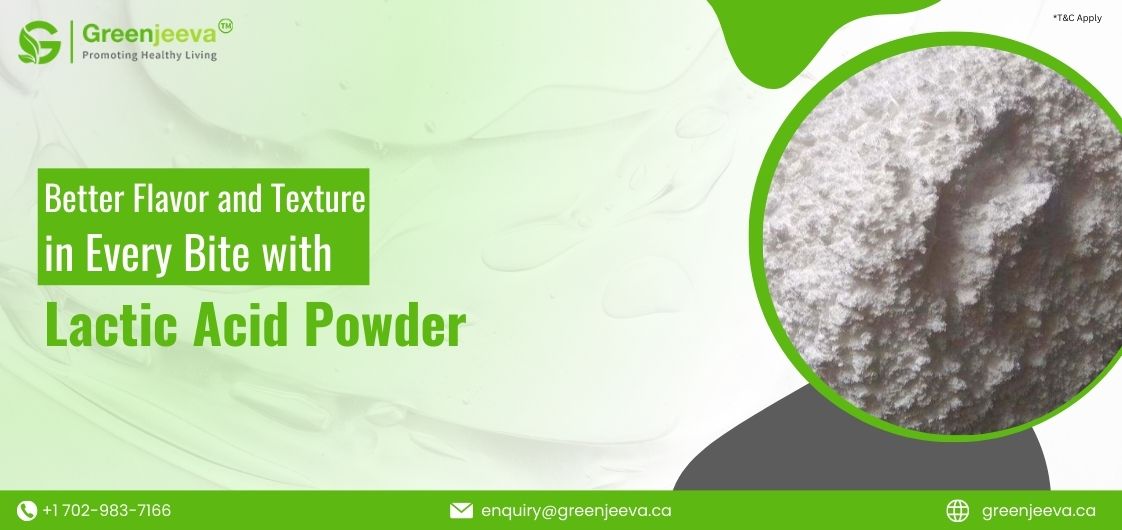
Lactic Acid Powder for Food, Beverage, and Dairy-Free Formulation in Canada
Summary, the quick version
The tang in yogurt, sourdough, pickles, and sauerkraut all comes from the same compound, lactic acid, produced naturally through fermentation.
Despite the name's connection to milk, lactic acid itself is not inherently a dairy ingredient, and it is commonly produced today by fermenting plant sugars, which is what makes a vegan lactic acid powder a genuine,well founded category.
As a food ingredient, lactic acid functions as a pH regulator, a flavouring acid, and a preservation aid through acidity, not as a health-effect ingredient.
It also appears in personal care formulations, where it is a well-known alpha hydroxy acid used for pH adjustment.
Request a free sample and place a bulk order quotation on the website, with dispatch from the Surrey and Pantos warehouses in Canada.
Bite into a pickle, spoon into a yogurt, or tear off a piece of sourdough, and the sharp, tangy note you taste is very often the same compound, lactic acid. It forms naturally wherever certain bacteria ferment sugars, which is why it turns up across such a wide range of foods that otherwise have almost nothing in common. Once you notice that pattern, it starts to make sense why manufacturers reach for a purified, powdered version of the same acid to build that tang deliberately, rather than relying on fermentation to happen at just the right pace every time.
This guide is written for food, beverage, and cosmetic manufacturers in Canada evaluating lactic acid powder as an ingredient. It covers where the ingredient actually comes from, why a vegan or dairy-free version is a meaningful distinction rather than amarketing label, what it does functionally in a formulation, and where it fits across food, beverage, and personal care applications.
Where Lactic Acid Actually Comes From
Lactic acid is an organic acid produced naturally when certain bacteria ferment sugars. The name comes from its early discovery in soured milk, but the compound itself is not tied to dairy. Modern lactic acid production commonly uses bacterial fermentation of plant-derived sugars, such as those from corn or beets, rather than milk.
This is worth sitting with for amoment, becauseit explains a genuine point of confusion. The name lactic acid understandably makes people assume a dairy origin, the same way lactose does. But the acid itself is a simple organic compound that can be produced from a range of fermentable sugar sources. A lactic acid powder made through plant-sugar fermentation is not derived from milk at any point in its production, which is exactly why a vegan or dairy-free designation on this ingredient is a real, defensible distinction rather than a loosely applied marketing term.
Lactic Acid Powder vs Liquid Lactic Acid
Lactic acid is available as both a liquid and a dry, powdered form, and the choice between them is mostly a matter of handling and formulation convenience rather than a difference in the acid itself. The powdered form offers some practical advantages for many manufacturers.
For a dry seasoning blend, a snack coating, or a powdered premix, the powder form isgenerally themore practical choice. For a liquid product where the acid is going straight into a wet mix, liquid lactic acid may integrate more directly. Either way, the functional role of the acid in the finished product is the same.

What Lactic Acid Powder Actually Does in a Formulation
In food manufacturing, lactic acid powder serves three core functions, adjusting pH, contributing a sour or tangy flavour note, and supporting shelf life by creating conditions less favourable to spoilage organisms. These areestablishedfood-technology roles, not claims about the finished product's effect on the person eating it.
pH regulation, used to bring a formulation to a target acidity for both flavor and processing reasons.
Flavor, contributing the characteristic sour or tangy note associated with fermented foods.
Shelf lifesupport, since lowering pH creates conditions that are less favourable for many spoilage organisms, a standard principle in food preservation.
Because these are processing functions, lactic acid is best understood as a functional acidulant rather than a nutrition ingredient. Any claim about the finished product's shelf life, safety, or eating quality remains something the manufacturer needs to establish through its own process validation and label review.
Applications in Dairy-Free and Plant-Based Formulations
Dairy-free and plant-based products often need to recreate a tangy, cultured flavour profile without using dairy fermentation. Lactic acid powder, particularly a vegan grade produced through plant-sugar fermentation, gives formulators a way to build that flavour note directly, rather than relying on plant-based cultures to develop it over time.
Plant-based yogurts and cultured products, where a tangy note supports the dairy-adjacent flavour profile.
Plant-based cheese alternatives, where acidity contributes to both flavour and texture development.
Dairy-free dressings and sauces, where a controlled sour note replaces what dairy fermentation would otherwise provide.
Because the flavour and pH effects are the same whether the acid comes from a plant-sugar or a dairy-adjacent fermentation route, the sourcing choice comes down to your label. A brand building a genuinely vegan or dairy-free product line needs the plant-sugar fermented grade specifically, not simply a powder labelled as lactic acid.
Applications in Conventional Food and Beverage Products
Outside of dairy-free formulations, lactic acid powder is used wherever a manufacturer wants a controlled, consistent sour note or a defined pH adjustment. Its dry, stable form makes it straight forward to dose precisely across repeated production runs.
Snack seasonings, where it balances flavour in savoury products.
Pickled and fermented products, supporting the characteristic sour flavour profile.
Sauces, dressings, and marinades, for flavour balance and pH control.
Bakery applications, where controlled acidity supports specific process requirements.
Lactic Acid in Cosmetic and Personal Care Formulations
Lactic acid is awell known alpha hydroxy acid used in personal care formulations, most commonly as a pH adjuster within a cosmetic product. This is a recognised functional category within cosmetic chemistry, and it should be described in those functional terms rather than as a claim about skin appearance or effect.
If you are formulating a personal care product, confirm the grade, purity, and any relevant cosmetic-specific documentation with your supplier, and work with your regulatory team to determine what, if any, function or claim language is appropriate for your specific finished product and target market.
Organic vs Conventional Lactic Acid, and What That Distinction Actually Means
Because lactic acid is produced through fermentation rather than grown as a crop, an organic claim on this ingredient typically relates to the certification status of the fermentation feed stock and process, rather than to the acid molecule itself, which is chemically identical regardless of its production route.
If an organic claim matters for your finished product label, ask your supplier specifically how the organic certification applies, whether that is to the feedstock, the fermentation process, or both, and request the documentation that supports it. This is a more nuanced certification question than it is for a whole fruit or vegetable powder, and it is worth clarifying directly rather than assuming.
What to Confirm on a Lactic Acid Powder Specification
Because lactic acid is a defined chemical compound rather than a variable botanical, its specification should be precise. These are the points worth confirming with any supplier.
Purity and assay percentage, with the test methodstated.
Source of the fermentation feedstock, particularly if a vegan or dairy-free claim matters to your label.
Grade, food grade or cosmetic grade, matched to your intended use.
Heavy metal and microbiological limits with test methods.
Allergen and non-GMO status.
Shelf life and recommended storage conditions.
Organic certification scope, if relevant, and what specifically it covers.
A supplier who can answer each of these clearly and in writing is generally the more reliable one to build a supply relationship with.
Sourcing Lactic Acid Powder from Green Jeeva Canada
Green Jeeva Canada supplies lactic acid powder for food, beverage, and supplement manufacturing, tested and documented under the same standard applied across its full ingredient portfolio. You can qualify a sample, then scale to a bulk order. Here is what a procurement team needs to know.
Food grade lactic acid powder, with vegan and dairy-free sourcing options available on request.
Green Jeeva Canada is COR, FDA, Halal, Kosher, GMA, and CFIA certified, and the material is fully traceable.
Heavy metals and microbiology are tested by USP methods, with a certificate of analysis for each lot.
A free sample is available, and a bulk order quotation can be placed on the website.
A zero-questions-asked return policy backs your first order.
Stock ships from the Surrey and Pantos warehouses in Canada, and documents download after registration.
If you are building a wider functional ingredient portfolio, lactic acid powder pairs well with ingredients such as sodium bicarbonate powder and sorbitol powder, both available through the same sourcing process.
Ready to source lactic acid powder in Canada?
View stock, the pricing structure, compliance documents, MOQ, and pack size on the website, request a free sample, and place a bulk order quotation with Green Jeeva Canada.
Lactic acid powder is supplied by Green Jeeva Canada as a raw ingredient for food, beverage, and cosmetic manufacturing. Finished product claims should be verified and substantiated by the manufacturer andcomply withapplicable regulations in the target market. This article is written by the Green Jeeva Canada QA and RA team for sourcing and formulation guidance.