
How to Choose an Organic Maca Root Powder Supplier: A Procurement Guide for Canadian Supplement Brands
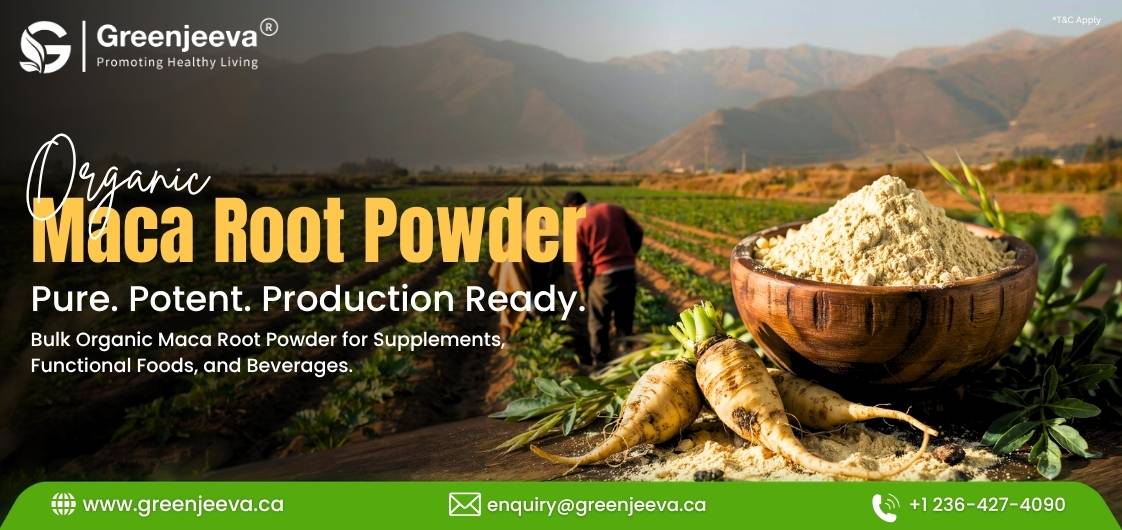
For many supplement brands, maca root powder looks like a straightforward botanical ingredient: source the root, process it into powder, test the batch, and add it into a formulation.
In practice, experienced procurement teams know the process is far more complex.
The difference between an average maca supplier and a reliable organic maca root powder supplier often comes down to factors that are not visible on a product page agricultural practices, drying methods, processing controls, documentation accuracy, batch consistency, and the supplier’s ability to support regulatory requirements.
Canadian supplement manufacturers, private-label brands, and contract manufacturers increasingly evaluate maca suppliers beyond price per kilogram. They need confidence that every shipment will meet formulation requirements, labeling expectations, and quality standards.
This guide explains what professional buyers should evaluate when sourcing organic maca root powder, including technical specifications, supplier qualifications, testing requirements, and common purchasing mistakes.
Understanding Maca Root: Botanical Identity and Ingredient Basics
Before evaluating suppliers, buyers should confirm the correct botanical identity.
The botanical name of maca root is: Lepidium meyenii Walp.
Maca belongs to the Brassicaceae family and is traditionally cultivated in the high-altitude regions of the Andes, particularly Peru.
The root is harvested, dried, and processed into powder for use in:
• Dietary supplements
• Functional beverages
• Smoothie blends
• Sports nutrition products
• Adaptogen formulations
• Wellness powders
• Private-label nutraceutical products
Commercial maca powder is available in different forms, including:
• Raw maca root powder
• Gelatinized maca root powder
• Organic maca root powder
• Colored varieties such as yellow, red, and black maca
Each format serves different formulation requirements.
What Procurement Teams Should Know Before Buying Bulk Maca Root Powder
Many buyers begin supplier discussions by comparing the price per kilogram.
However, maca pricing depends on multiple variables:
• Origin of cultivation
• Organic certification status
• Processing method
• Moisture specifications
• Particle size
• Testing requirements
• Packaging format
• Order volume
• Logistics route
A lower-priced maca powder may sometimes indicate differences in processing controls, documentation availability, or raw material sourcing practices.
Experienced buyers usually evaluate the complete supply profile rather than the invoice price alone.
Raw Material Sourcing Challenges in Maca Root Supply
Maca is a specialty botanical ingredient where agricultural conditions significantly influence quality.
1. Growing Region and Agricultural Practices
Maca traditionally grows in harsh high-altitude environments where temperature fluctuations, soil conditions, and cultivation cycles affect root development.
A qualified supplier should be able to provide information about:
• Country of origin
• Farming practices
• Organic certification documentation
• Harvest season
• Supplier traceability system
For organic maca buyers in Canada, traceability becomes especially important because manufacturers may need supporting documentation for audits, retailer requirements, or certification reviews.
2. Seasonal Availability and Supply Planning
Unlike commodity ingredients, botanical raw materials can experience supply fluctuations.
Factors affecting availability include:
• Weather conditions
• Crop yield variations
• Organic farming expansion
• Export regulations
• Processing capacity
Procurement teams sourcing bulk maca root powder should consider inventory planning instead of purchasing only when demand appears.
A supplier with consistent raw material access can reduce formulation disruptions.
Raw Maca Powder vs Gelatinized Maca Powder: What Buyers Should Understand
One of the most common technical questions from formulators is whether to choose raw or gelatinized maca powder.
Raw Maca Root Powder
Raw maca is produced by drying and milling the root.
Typical characteristics:
• More traditional processing approach
• Maintains the natural composition of the root
• Commonly used in smoothie powders and general wellness products
Gelatinized Maca Powder
Gelatinization involves processing the maca to remove much of the starch content.
Benefits include:
• Improved solubility
• More concentrated powder by weight
• Easier digestion for some consumers
• Better suitability for certain supplement formats
However, gelatinization is an additional processing step and may influence:
• Cost
• Flavor profile
• Processing time
• Nutritional composition
The correct choice depends on the final application.
A beverage manufacturer creating a maca smoothie blend may have different requirements compared with a capsule manufacturer.
Key Quality Specifications to Review When Buying Organic Maca Root Powder
A supplier specification sheet provides important information, but procurement teams should verify whether those specifications are supported by actual batch testing.
Moisture Content
Moisture levels influence:
• Shelf stability
• Microbial risk
• Powder flow characteristics
• Storage performance
Most botanical powders are controlled within a defined moisture range based on customer requirements.
A supplier should provide moisture testing results for each batch through the Certificate of Analysis (COA).
Particle Size and Mesh Specification
Particle size affects:
• Mixing behavior
• Suspension characteristics
• Capsule filling performance
• Consumer experience
For example:
• Fine powder may perform better in drink mixes
• Larger particle sizes may suit certain blends or processing systems
Buyers should confirm mesh specifications before placing large production orders.
Microbial Testing
Botanical powders require strong microbiological controls.
Typical testing parameters include:
• Total Plate Count
• Yeast and Mold
• E. coli
• Salmonella
• Coliforms
Canadian supplement manufacturers commonly request microbial reports before approving suppliers.
Heavy Metal Testing
Because maca is an agricultural ingredient, heavy metal testing is an important quality requirement.
Common testing includes:
• Lead
• Cadmium
• Mercury
• Arsenic
Testing frequency and limits should align with the buyer’s regulatory requirements and intended application.
Pesticide Residue Testing
For organic maca root powder, pesticide testing helps verify compliance with organic sourcing expectations.
Buyers should confirm:
• Testing methodology
• Laboratory credentials
• Organic certification validity
What Documentation Should a Maca Root Powder Supplier Provide?
Professional ingredient buyers typically expect more than a basic product specification.
A reliable supplier should be prepared to provide:
• Certificate of Analysis (COA)
• Product specification sheet
• Organic certificate
• Non-GMO documentation
• Allergen statement
• Heavy metal report
• Microbial analysis
• Pesticide testing report
• Country of origin information
• Stability information when available
For Canadian buyers, documentation readiness can significantly reduce supplier approval timelines.
How to Evaluate an Organic Maca Root Powder Supplier
Before approving a supplier, procurement teams should evaluate several areas.
1. Quality System
Ask:
• Are batches tested before shipment?
• Are testing methods documented?
• Are retained samples maintained?
• Is there a complaint handling process?
2. Manufacturing Capability
A supplier should demonstrate control over:
• Cleaning procedures
• Drying methods
• Grinding equipment
• Foreign material controls
• Packaging standards
3. Batch-to-Batch Consistency
Consistency matters more than a single good shipment.
A supplier should maintain control over:
• Color variation
• Flavor profile
• Powder characteristics
• Active compound profile
This becomes especially important for brands producing repeat formulas.
Common Mistakes Buyers Make When Sourcing Maca Powder
Choosing Only Based on Price
The cheapest supplier may not provide the documentation or consistency needed for commercial production.
Ignoring Processing Method
Raw and gelatinized maca powders behave differently in formulations.
Selecting the wrong type can create issues during production.
Not Reviewing COA Details
Some buyers approve ingredients without carefully checking:
• Test dates
• Laboratory information
• Specification limits
• Batch numbers
A COA should confirm the actual shipment being purchased.
Buying Without Supply Planning
Botanical ingredients require forecasting.
Unexpected demand increases can create sourcing challenges if suppliers are not prepared.
Where Can I Buy High-Quality Maca Root Powder Online in Canada?
Canadian supplement companies looking for bulk maca root powder should work with suppliers that can support:
• Commercial quantities
• Documentation requirements
• Organic certification needs
• Reliable logistics
• Consistent quality standards
For professional sourcing, buyers should prioritize ingredient suppliers rather than marketplace sellers because commercial manufacturing requires traceability, testing, and regulatory documentation.
When comparing suppliers, evaluate:
• MOQ requirements
• Shipping options to Canada
• Warehouse availability
• Certification documentation
• Technical support
Using Maca Root Powder in Smoothie and Functional Beverage Formulations
Maca root powder is commonly used in smoothie blends because of its naturally earthy, nutty flavor profile.
Typical formulation combinations include:
• Maca + cacao powder
• Maca + protein blends
• Maca + fruit powders
• Maca + plant-based nutrition formulas
For beverage manufacturers, important considerations include:
• Powder dispersion
• Flavor balance
• Solubility expectations
• Particle size compatibility
Formulators should test maca alongside other ingredients because botanical flavors can influence the final sensory profile.
Final Thoughts: Selecting the Right Maca Root Powder Supplier
Sourcing organic maca root powder is not simply a matter of finding a supplier with competitive pricing.
For Canadian supplement manufacturers and food companies, the right supplier should provide:
• Reliable agricultural sourcing
• Consistent processing standards
• Complete documentation
• Transparent quality testing
• Stable supply capability
A supplier relationship should support long-term product quality, not just the first shipment.
The strongest procurement decisions come from evaluating the complete ingredient supply chain from farm sourcing to finished powder.

.jpeg)