Organic Oat Grass Powder in Skincare, A Formulation and Sourcing Guide for Cosmetic Manufacturers in Canada
Choosing a botanical ingredient for cosmetic formulations involves more than selecting a plant-based raw material. Factors such as particle size, dispersion, color consistency, documentation, and batch-to-batch quality all influence manufacturing outcomes. Organic oat grass powder is no exception.
This guide looks at oat grass powder the way a formulator does, which is by how it disperses, colors, and sits in serums, masks, and emulsions, and then covers how to source organic oat grass powder in bulk in Canada.
What Is Organic Oat Grass Powder?
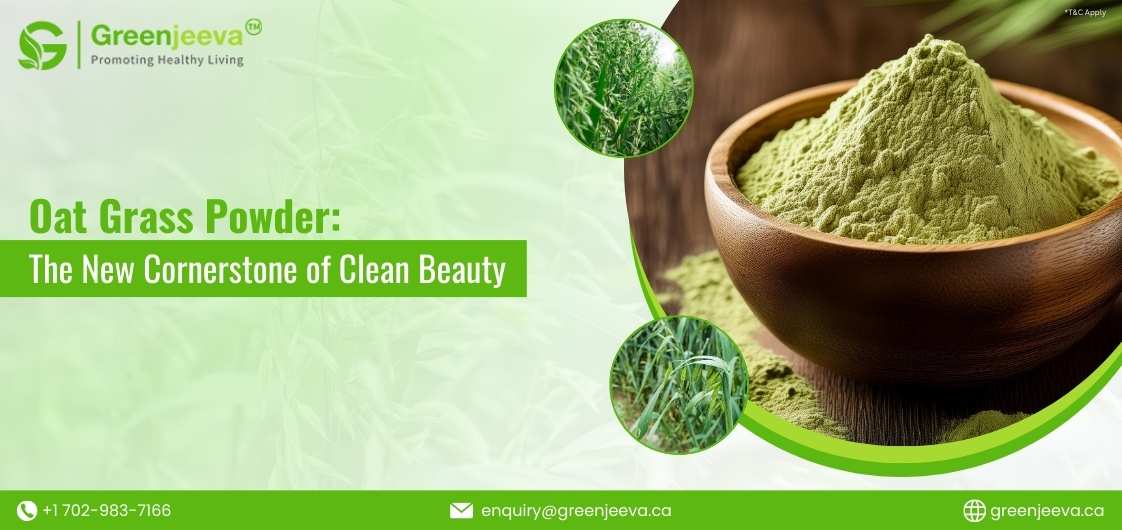
Organic oat grass powder is a dried, milled powder made from young oat grass, the early leaf growth of Avena sativa. It is a chlorophyll-rich, plant-based botanical ingredient used in cosmetic and personal care formulations. Formulators use it for its natural green color and as a botanical addition to a clean-label ingredient list. Any finished-product claim is the manufacturer's responsibility to substantiate.
As a young cereal grass, it carries chlorophyll, which gives the vivid green tone, along with the plant's naturally occurring compounds. For a cosmetic brand, the appeal is a recognizable, plant-based, botanical input rather than any asserted effect on the skin. How it performs in a formula depends mostly on its grade and particle size.

Technical Specifications to Review Before Formulating with Organic Oat Grass Powder
For cosmetic manufacturers, the specification sheet provides more than quality data. It helps determine how an ingredient is likely to behave during production and in the finished product.
This plant-based powder is produced from the leaves of Avena sativa and typically offers a long shelf life when stored under recommended conditions. Beyond botanical identity, formulators often review particle size distribution, bulk density, moisture content, and microbiological specifications before approving a material for use.

For example, oat grass powder with a fine particle distribution is generally easier to incorporate into lotions, creams, and masks, while coarser particles may create a more textured sensory experience. Understanding these specifications before formulation can reduce development time and help avoid unnecessary reformulation.
Choosing the Right Particle Size for Cosmetic Applications
Particle size is one of the most important factors when selecting organic oat grass powder for cosmetic formulations. It influences texture, dispersion, visual appearance, and overall consumer experience.
A common sourcing mistake is choosing a botanical ingredient based solely on botanical identity while overlooking particle size requirements. Two oat grass powders may come from the same plant source but behave very differently during manufacturing.

Before approving an oat grass powder supplier, verify the particle size specification rather than relying on general descriptions such as "fine powder." A documented mesh profile provides a more reliable indication of how the ingredient is likely to perform in production.
Oat Grass Powder as a Natural Colorant
Organic oat grass powder contributes a natural green color to cosmetic products, which suits brands replacing synthetic dyes. The chlorophyll content gives the green tone. As with any botanical colorant, the exact shade can vary between batches, so formulators plan for natural color variation.
Natural color is one of the most practical uses for oat grass powder in personal care. It gives face masks, bath products, and soaps a plant-derived green without a synthetic dye. Because botanical colors shift with batch and with the formula's pH and processing, test the finished shade rather than judging from the raw powder.
Formulating in Water-Based Systems and Emulsions
Oat grass powder is used in water-based formulations and cosmetic emulsions such as lotions and creams. Because it is a plant material added to water-containing products, a proper preservation system is essential to keep the formula stable and safe. Formulators also account for how the powder disperses and how it affects the final color and texture.
Preservation is the key technical point here. Any water-based cosmetic that contains a botanical powder needs an appropriate, tested preservative system, so build that into the formula from the start. In addition, disperse the powder carefully to avoid clumping, and confirm that the color and texture hold through the full manufacturing process.
Common Formulation Considerations When Working with Oat Grass Powder
This botanical powder is generally straightforward to work with, but several practical considerations can influence manufacturing outcomes.
Dispersion
Botanical powders can clump when introduced directly into water-based systems. Controlled mixing and proper dispersion techniques help achieve a more uniform appearance.
Color Variation
Because oat grass powder derives its green color naturally from chlorophyll, slight color variation may occur between lots. Manufacturers should evaluate finished-product appearance using production samples rather than relying solely on raw material color.
Sedimentation
In liquid systems, insoluble botanical particles may settle over time. Formulators often assess suspension stability during development and stability testing.
Texture
Particle size selection has a direct impact on sensory experience. A particle size suitable for a scrub may not be appropriate for a serum or lotion.
By evaluating these factors early, cosmetic manufacturers can reduce reformulation cycles and improve production consistency.
Cosmetic Formats That Use Oat Grass Powder
Manufacturers use oat grass ingredients in face masks, serums, lotions, creams, cleansers, scrubs, bath products, and bar soaps. It works across these formats as a plant-based botanical input and a natural green colorant. The grade and particle size are matched to each format.
Clay-based face masks are a natural fit, since the powder blends into the clay and adds a botanical green. In scrubs and soaps, a coarser grade gives texture and color at once. Across all of these, oat grass powder supports a clean-label, plant-based, and sustainable positioning that many personal-care brands want.
Clean Beauty and Sustainability Positioning
Organic oat grass powder supports clean beauty and sustainable skincare positioning. It is a plant-based, renewable, biodegradable botanical ingredient with organic certification available. These are factual sourcing and label points that brands can use, distinct from any claim about what the ingredient does to the skin.
For a green beauty brand, the ingredient fits both the label and the sustainability story. As a renewable crop with organic certification, it strengthens a plant-based ingredient statement. The finished-product positioning and any performance claim are set and substantiated by the manufacturer.
Supplier Evaluation Checklist for Organic Oat Grass Powder
Selecting a supplier involves more than comparing price or availability.
Before approving, consider the following:
Botanical Verification
- Confirm botanical identity asAvena sativa
Particle Size Specification
- Review documented mesh distribution
Documentation
- Certificate of Analysis (COA)
- Organic certification
- Product specification sheet
Quality Testing
- Heavy metal testing
- Microbiological testing
- Identity verification
Traceability
- Country of origin information
- Batch traceability
Sample Evaluation
- Test color
- Test texture
- Test dispersion
- Verify compatibility within the intended formulation
Supplier qualification is often one of the most overlooked stages of ingredient sourcing. A thorough evaluation process can help reduce quality issues, delays, and reformulation costs later in production.
How Green Jeeva Supports Cosmetic Manufacturers in Canada
Green Jeeva supplies organic oat grass powder for cosmetic and personal care manufacturing applications across Canada.
For manufacturers evaluating new botanical ingredients, access to documentation is often just as important as access to inventory. Registered customers can review product specifications, certifications, available documentation, warehouse information, packaging options, and pricing structures directly through the platform. This enables procurement, QA, and formulation teams to evaluate ingredients more efficiently before commercial production.
Key sourcing features include the following:
- MOQ starting at 25 kg
- Bulk supply for commercial manufacturing
- Free sample requests and bulk quotations online
- Access to specifications and certifications after registration
- Batch-specific documentation and traceability support
- Quality testing and supplier qualification documentation
This approach helps procurement teams, formulators, and QA professionals complete ingredient evaluations with greater confidence before moving into production.
Source Bulk Organic Oat Grass Powder in Canada
You can source bulk organic oat grass powder from Green Jeeva in Canada with full documentation for cosmetic use. On the product page you can view stock, the pricing structure, compliance documents, MOQ, and pack size. To move forward, request a free sample and a quotation, and the team will match the right grade and specification.

Ready to source bulk oat grass powder for skincare in Canada?
View stock, the pricing structure, compliance documents, MOQ, and pack size on the product page, then request a free sample and a quotation.
Organic oat grass powder is supplied as a raw ingredient for cosmetic and personal care manufacturing. Green Jeeva does not make performance or health claims on the ingredient's behalf. Finished-product claims, including any skin or hair statements, should be substantiated by the manufacturer and comply with applicable cosmetic regulations in the target market. This article is written by Green Jeeva's QA and RA team for sourcing and formulation guidance.