What organic rice bran powder actually delivers in a skincare formulation
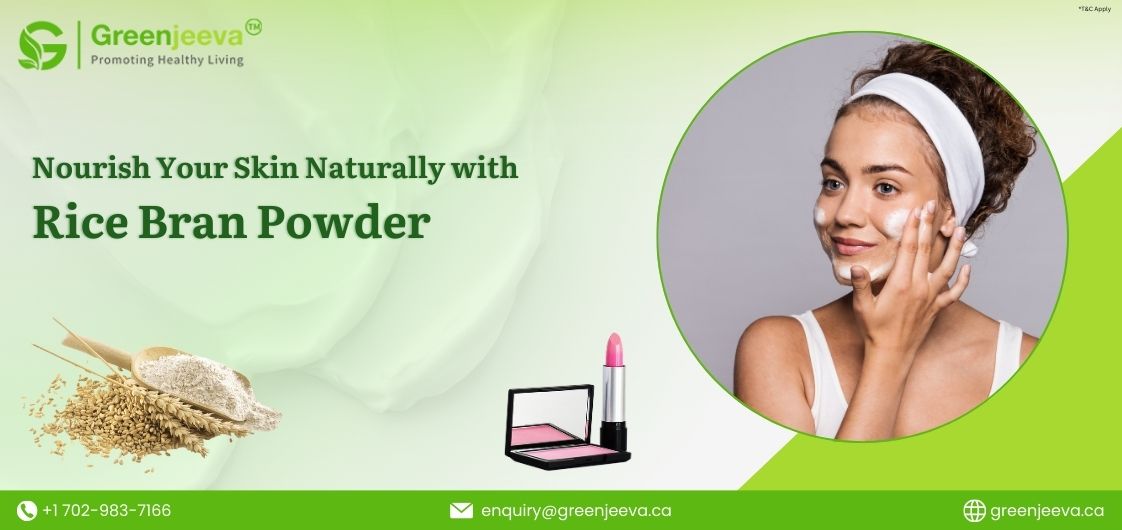
Rice bran shows up in skincare marketing with afairly consistentstory: vitamin E, gamma-oryzanol, ferulic acid, antioxidants, brightening, exfoliation, done. Most of that is true of rice bran as a plant material. It's a lot less clear once you ask a more specific question: does the dried, milled powderactually deliverthose actives the way the marketing implies, or is that story really about rice bran oil?
This guide covers what organic rice bran powder is, how its actives compare to the oil and extract forms of the same ingredient, what a formulator sshould actually specify whensourcing it as a physical exfoliant, and where the claims line sits under Canada's cosmetic regulations.
WHAT IS ORGANIC RICE BRAN POWDER?
Rice bran is the outer layer of the rice kernel, removed during milling, and it makes up roughly 8 percent of the whole grain. Organic rice bran powder is that bran layer, dried and milled into a fine powder, retaining fibre, protein, vitamins, and the plant's natural oil content along with it.
The bran fraction is where rice's most-discussed skincare actives, including ferulic acid and gamma-oryzanol, are concentrated relative to the rest of the grain. That's the accurate part of the marketing story. The part that gets glossed over is how much of that activity actually transfers into a dry powder format.
THE ACTIVE STORY: POWDER VS. OIL VS. EXTRACT
Gamma-oryzanol is oil-soluble, and it occurs in rice bran oil at roughly 1 to 2 percent of the oil itself, where it functions as a natural antioxidant. That figure is specifically about the extracted oil fraction, not the whole dried bran. Standard chemical refining of rice bran oil destroys roughly 90 percent of its gamma-oryzanol content, which is exactly why cosmetic and nutraceutical formulators go looking for specialized extraction methods when they want a concentrated, standardized source of it.
Whole dried rice bran powder contains these compounds, but at nowhere near the concentration or bioavailability of a purpose-extracted oil or a standardized ferulic acid or oryzanol ingredient. A powder format is genuinely useful for what it does well, which is texture and mild exfoliation, but a brand chasing a specific antioxidant or brightening claim tied to gamma-oryzanol or ferulic acid concentration should be sourcing an oil or standardized extract, not assuming the raw powder delivers an equivalent dose.
Both compounds are also light- and air-sensitive, with documented antioxidant activity loss over prolonged exposure. That's a real formulation consideration for a finished product, but it applies more directly to concentrated oil or extract forms than to a fiber-heavy powder, where the actives are a smaller fraction of the total material to begin with.
RICE BRAN POWDER AS A PHYSICAL EXFOLIANT: WHAT TO SPECIFY
This is the function rice bran powder is genuinely well suited to, and it's specification-dependent in a way that "fine powder" on a spec sheet doesn't capture. Particle size determines whether the powder exfoliates gently or causes micro-abrasion, and that distinction matters for both product performance and cosmetic safety.
Too coarse a grind risks skin irritation and micro-tears, particularly on sensitive skin, which is a real safety consideration rather than just a texture preference. Too fine a grind loses the mechanical exfoliating function that's the actual selling point of using a bran powder over, say, a smoother rice flour. Request the specific mesh size or particle size distribution from any supplier rather than accepting "fine powder" as a specification.
WHAT YOU CAN ACTUALLY CLAIM ON A CANADIAN COSMETIC LABEL
Cosmetics in Canada are regulated under the Food and Drugs Act and the Cosmetic Regulations, and Health Canada draws a specific, fairly narrow line between a cosmetic claim and a therapeutic one. Health Canada's own guidance gives a clean example of where that line sits: a claim to temporarily reduce the appearance of puffiness is cosmetic, while a claim to reduce inflammation is therapeutic, and therapeutic claims shift a product into drug or natural health product territory with a completely different regulatory pathway.
Applied to rice bran powder, that line falls roughly where you'd expect. Claiming the powder brightens the appearance of skin or helps smooth texture through gentle exfoliation stays on the cosmetic side. Claiming it treats hyper pigmentation, heals irritation, or reduces inflammation pushes toward therapeutic language that a cosmetic label in Canada isn't supposed to carry.
Every cosmetic sold in Canada also requires a Cosmetic Notification Form filed with Health Canada within 10 days of first sale, and every formulation should be checked against the Cosmetic Ingredient Hotlist, which lists roughly 500 prohibited or restricted substances. Health Canada doesn't pre-approve cosmetics before sale, so this is a self-managed compliance obligation rather than something that gets caught for you upfront.
RICE BRAN POWDER VS. OIL VS. EXTRACT AT A GLANCE
Attribute: Primary function
Rice Bran Powder: Physical exfoliation, texture, mild nutrient content
Rice Bran Oil: Oil-soluble actives (gamma-oryzanol, tocopherols) at meaningful concentration
Rice Bran Extract: Standardized, concentrated actives for a specific claim
Attribute: Gamma-oryzanol delivery
Rice Bran Powder: Present, but at low, non-standardized levels
Rice Bran Oil: Meaningful, extraction-method-dependent
Rice Bran Extract: Typically standardized to a stated percentage
Attribute: Typical cosmetic format
Rice Bran Powder: Masks, scrubs, cleansing powders
Rice Bran Oil: Serums, moisturizers, carrier oil blends
Rice Bran Extract: Serums, targeted brightening or antioxidant formulations
WHAT TO ASK YOUR SUPPLIER
Ask for the specific mesh size or particle size distribution if the intended use is exfoliation, since this is the property that determines whether the product performs as intended. Ask whether the material has been tested for oxidative stability or rancidity markers, since bran retains natural oil content and isn't immune to the same degradation concerns as other oil-bearing seed and grain powders. Confirm organic certification against the certification body relevant to your target market, and request documentation in a form usable for a Cosmetic Notification Form submission rather than a generic marketing spec sheet.
SOURCE BULK ORGANIC RICE BRAN POWDER IN CANADA
Green Jeeva supplies organic rice bran powder to Canadian cosmetic and personal care manufacturers. Confirm current stock status and detailed specifications directly, since documentation availability can vary by batch.
Ready to source bulk organic rice bran powder?
Request a certificate of analysis, a sample, and wholesale pricing for cosmetic-grade organic rice bran powder.
DISCLAIMER
Organic rice bran powder is supplied as a raw ingredient for cosmetic and personal care manufacturing. In Canada, cosmetic products are regulated under the Food and Drugs Act and the Cosmetic Regulations, and claims describing the diagnosis, treatment, or mitigation of a skin condition may shift a product's classification to a drug or natural health product with different regulatory requirements. Finished-product claims should be substantiated by the manufacturer, checked against the Cosmetic Ingredient Hotlist, and filed via a Cosmetic Notification Form where required. This article is written by Green Jeeva's QA and RA team for sourcing and formulation guidance.