Peppermint Extract vs. Peppermint Leaf Powder: A Manufacturer's Guide to Choosing the Right Format
If you formulate food, beverage, or supplement products, you've likely had to choose between peppermint extract and peppermint leaf powder, and the two aren't interchangeable. One is a concentrated liquid built for clean, invisible flavor. The other is a whole-leaf powder that brings flavor, color, and texture at once. Picking the wrong one can throw off your formulation cost, shelf life, or finished product's appearance.
This guide breaks down the practical differences—flavor intensity, versatility, visual impact, shelf stability, and cost—so you can match the right format to your product before you scale a batch. Green Jeeva sources and processes both peppermint extract and organic peppermint leaf powder through our own farming and quality network, so the specs below reflect what we see in production, not just theory.
The Basics
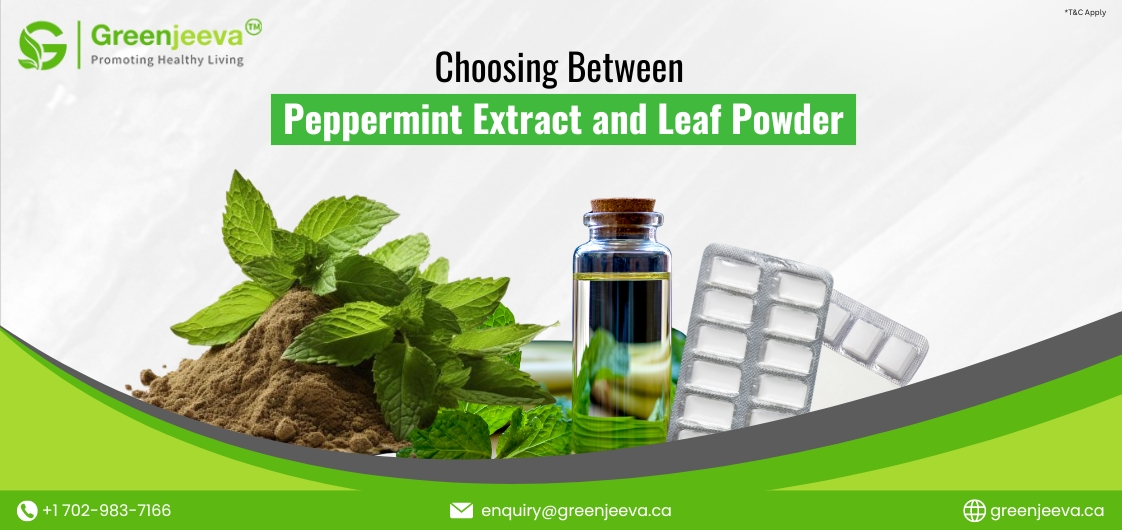
Peppermint extract is a concentrated liquid, typically made by steeping peppermint oil or leaf material in an alcohol or glycerin base. It delivers pure, isolated mint flavor with no fiber, color, or texture added to your formulation.
Peppermint leaf powder is made by drying whole peppermint leaves and grinding them into a fine powder. It carries the full leaf profile—flavor, natural chlorophyll color, and fine plant texture—rather than an isolated compound.
Flavor Profile
Peppermint extract is sharp, clean, and intensely minty. Because it's concentrated, small dosing goes a long way, usually measured in drops or fractions of a percent by weight.
Peppermint leaf powder delivers a rounder, more layered flavor: still distinctly mint-forward, but with earthy, slightly sweet, tea-like undertones from the leaf itself. It generally requires a higher inclusion rate to hit the same flavor intensity as the extract.
Versatility Across Applications
Extract is the better fit when you need mint flavor without changing appearance or texture. Think clear beverages, hard candy, ice cream bases, or chocolate coatings where a smooth finish matters.
Leaf powder works well when texture and visual "naturalness" are part of the product story, such as in herbal teas, mint chocolate chip formulations, savory rubs, or supplement capsules and tablets where whole-leaf positioning supports label claims.
Visual Impact
Extract is functionally invisible in a finished product. It flavors without altering color or appearance. Leaf powder introduces visible green flecking, which can be a selling point in products where you want to visually signal "herbal" or "natural" on-shelf.
Shelf Life and Storage
Extract's alcohol base gives it strong shelf stability, often retaining potency for years when stored correctly. Leaf powder has a shorter effective shelf life and is more sensitive to light, heat, and moisture. Proper packaging and storage conditions matter more here to preserve aroma and color.
Cost Considerations
Extract typically costs more per unit but is used in smaller quantities due to its concentration. Leaf powder is usually less expensive per kilogram but may require a higher inclusion rate to match flavor intensity. So, the total cost per finished batch is worth calculating both ways rather than comparing raw unit price alone.
Which Should You Choose?
If your priority is a clean, concentrated mint flavor with zero visual or textural change, peppermint extract is the more efficient choice. If you want flavor plus natural color and texture—or you're formulating around a whole-food or herbal positioning—peppermint leaf powder is usually the better fit.
Many manufacturers use both: extract for flavor intensity and leaf powder for the visual and textural cues that signal "natural" to the end consumer.
These statements have not been evaluated by the Food and Drug Administration. This product is not intended to diagnose, treat, cure, or prevent any disease.