Plant-Based Vitamin and Mineral Ingredients for Supplement Formulation in Canada
Summary, the quick version
Plant-based and whole-food ingredients can supply a range of vitamins and minerals used in supplement formulation, as an alternative sourcing route to isolated synthetic forms.
This guide maps common nutrient categories, vitamin C, iron, calcium, magnesium, vitamin A precursors, vitamin D, omega-3 fatty acids, zinc, and B vitamins, to the plant and algal sources typically used to supply them.
Each source is described by its composition, not by a health effect. Any nutrition or health claim on a finished supplement is the manufacturer's responsibility to substantiate.
Green Jeeva Canada supplies a broad portfolio of these botanical and algal ingredients, tested and documented for supplement manufacturers.
Request a free sample and place a bulk order quotation on the website, with dispatch from the Surrey and Pantos warehouses in Canada.
Supplement brands building plant-based and clean-label formulas often need to source a whole portfolio of botanical and algal ingredients rather thana single one. This guide is written for supplement manufacturers, product developers, and procurement teams in Canada. It maps the plant and algal sources commonly used across nine nutrient categories and explains how to specify and source them, without describing any health effect, since that determination and any related claim belong to the manufacturer of the finished product.
Why Manufacturers Source Plant-Based Nutrient Ingredients
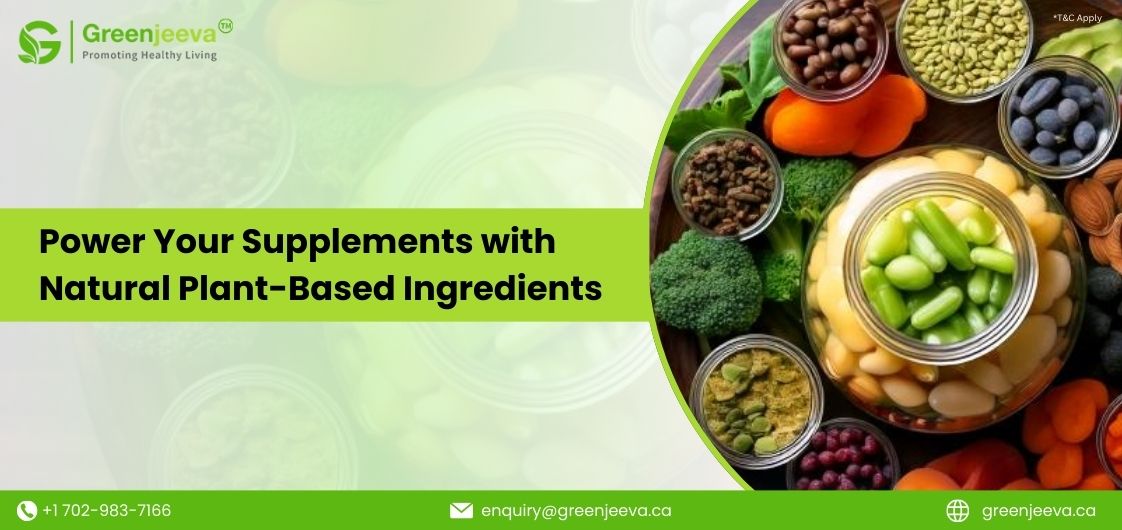
Plant-based and algal ingredients give supplement manufacturers a sourcing alternative to isolated synthetic vitamin and mineral forms. They fit a whole-food, clean-label, and vegan-friendly positioning, and they let a brand build an ingredient list around recognisable botanicals rather than isolated compounds.
The reasons a manufacturer chooses this route are largely about label, sourcing, and market positioning.
A whole-food or botanical ingredient list, rather than isolated compound names.
Vegan and vegetarian formulation, avoiding animal-derived sources for nutrients like vitamin D and B12.
Clean-label and natural positioning that appeals to a plant-based buyer base.
Access to a wider ingredient story, since a botanical source carries its own composition alongside the target nutrient.
None of this implies that a plant-based source performs differently in the body than an isolated form. That is a formulation and regulatory question for the brand, informed by its own product testing and label strategy. This guide stays with sourcing and composition.
Plant and Algal Sources by Nutrient Category
The table below maps nine common nutrient categories to the plant and algal ingredients typically used to supply them in a plant-based formulation. Each entry is a compositional fact about the source, not a statement about the finished supplement's effect.
This table is a sourcing map, not a benefit chart. The presence of a compound in a plant source is a compositional fact, confirmed by the ingredient's specification and testing, and any statement about what that means for the finished product's health effect is the manufacturer's responsibility.

Vitamin C Sources: Acerola, Camu Camu, and Amla
Acerola cherry, camu camu, and amla are fruit sources associated with a high natural vitamin C content, and extracts from these fruits are commonly standardized to a defined vitamin C percentage. They are used as an alternative to synthetic ascorbic acid, where a whole-fruit or botanical label is preferred.
When sourcing a vitamin C fruit extract, confirm the standardized vitamin C percentage and the test method on the specification, in the same way you would for any standardized botanical extract. This lets you compare suppliers on a like-for-like basis and dose accurately in your formula.
Whole-Food and Algal Sources for Iron, Calcium, and Magnesium
Spinach and spirulina are sourced for iron content, sesame seed and almond for calcium, and pumpkin seed and chia seed for magnesium. Each is a whole-food or algal powder that carries the named mineral as part of its natural composition, alongside other compounds native to the source material.
For these mineral-associated powders, the specification should confirm the plant or algal source, the particle size, and where relevant a mineral content figure with its test method. Because mineral levels in whole foods can vary with growing conditions, ask suppliers whether the ingredient is tested lot to lot or supplied to a general compositional range.
Vitamin A Precursor, Vitamin D, Omega-3, and Zinc Sources
Sweet potato and carrot are root vegetable sources of beta-carotene, a plant compound and vitamin A precursor. UV-exposed mushrooms are one of the few plant-based routes to vitamin D2. Flaxseed and algal oil are common plant and algal omega-3 sources. Chickpea and lentil are legume sources associated with zinc.
Each of these follows the same sourcing logic. Confirm the specific compound the ingredient is meant to supply, such as beta-carotene rather than vitamin A itself, or ALA rather than the more concentrated EPA and DHA forms found in algal oil, since these distinctions affect both the label and the formulation.
B Vitamin Sources, Nutritional Yeast and Whole Grains
Nutritional yeast is a commonly used vegan source associated with B12 content, and whole grains such as quinoa and oats are associated with a range of B vitamins. Both are used in plant-based supplement formulations where an animal-derived B12 source is not appropriate for the product's label.
Confirm the B12 content and test method on a nutritional yeast specification if B12 is the reason for including it, since B12 levels can vary by product and by fortification approach used by the raw material supplier.
Why Compound Levels Vary Across Whole-Food and Botanical Sources
Unlike a synthetic, isolated nutrient, a whole-food or botanical source carries its target compound at a level set by nature, and that level can shift with growing conditions, harvest timing, and processing. Planning for this variability is part of sourcing a plant-based ingredient responsibly, and it is where standardization and testing earn their keep.
Two sourcing habits help manage this variability in practice.
Where a standardized extract is available, such as a vitamin C percentage on an acerola orcamucamuextract, use it when your formula needs a defined, repeatable level.
Where the ingredient is a whole-food powder without a standardized marker, ask the supplier whether the compositional range is confirmed lot to lot or supplied as a general expectation, and build your specification around whichever applies.
Neither approach is wrong. A standardized extract suits a product that needs a precise, labelled amount, while a whole-food powder suits a product built around the ingredient itself rather than a single compound. Knowing which one you are buying, and asking for the data that backs it, is the difference between a specification you can rely on and one that only sounds precise.
What to Confirm on a Plant-Based Nutrient Ingredient Specification
Because this category spans many different plant and algal materials, the specification points to confirm vary by ingredient type. A few checks apply across the portfolio and are worth confirming for every source you bring into a formulation.
Botanical or algal identity and the plant part or material used.
Any standardized compound content, such as vitamin C percentage on a fruit extract, with the test method stated.
Heavy metal and microbiological limits with test methods.
Allergen and non-GMO status and organic certification were claimed.
Traceability to the source, so the paperwork ties to the lot.
Building a portfolio of ingredients from one documented supplier simplifies this work, since the specification format and the paperwork stay consistent across sources.
Sourcing Plant-Based Vitamin and Mineral Ingredients from Green Jeeva Canada
Green Jeeva Canada supplies a broad portfolio of plant-based and algal ingredients for supplement manufacturing, tested and documented across the range. You can qualify samples from more than one category, then scale to bulk orders. Here is what a procurement team needs to know.
A wide botanical, fruit, seed, and algal ingredient portfolio suited to plant-based supplement formulation.
Green Jeeva Canada is COR, FDA, Halal, Kosher, GMA, and CFIA certified, and the material is fully traceable.
Heavy metals and microbiology are tested by USP methods, with a certificate of analysis for each lot.
Available in bulk pack sizes suited to both pilot batches and production runs.
A free sample is available, and a bulk order quotation can be placed on the website.
A zero-questions-asked return policy backs your first order.
Stock ships same day from the Surrey and Pantos warehouses in Canada, and documents download after registration.
Two related ingredients already in the Green Jeeva Canada portfolio are yeast beta glucan powder, relevant to the B vitamin category, and reishi mushroom extract powder, relevant to the mushroom category. Review the certificate of analysis for the specific lot before you formulate.
Ready to source plant-based vitamin and mineral ingredients in Canada?
View stock, the pricing structure, compliance documents, MOQ, and pack size on the website, request a free sample, and place a bulk order quotation with Green Jeeva Canada.
Browse the ingredient portfolio
The plant and algal-ingredients described in this article are supplied by Green Jeeva Canada as raw materials for dietary supplements and food manufacturing. Any nutrition or health claim on a finished supplement should be verified and substantiated by the manufacturer and comply with applicable regulations in the target market. This article is written by the Green Jeeva Canada QA and RA team for sourcing and formulation guidance.