The real story behind the pumpkin spice latte, and where actual pumpkin fits in
Here's a fact that surprises a lot of people: when Starbucks launched the Pumpkin Spice Latte in 2003, it contained no pumpkin at all. It was cinnamon, nutmeg, clove, and caramel coloring, riding on a name that implied a fruit that wasn't actually in the cup. That stayed true for twelve years, until public criticism (notably from food blogger Vani Hari) pushed Starbucks to reformulate the drink in 2015 to include a small amount of real pumpkin purée, roughly 2 percent of the sauce, made from kabocha pumpkins .
That gap between "pumpkin spice" and actual pumpkin is exactly the space organic pumpkin powder occupies. This guide covers what genuinely separates pumpkin spice flavoring from real pumpkin, how organic pumpkin powder is made, why the drying method changes what you're actually buying, and how powder differs functionally from purée.
PUMPKIN SPICE VS. PUMPKIN: TWO COMPLETELY DIFFERENT THINGS
"Pumpkin spice" refers to a blend of spices traditionally paired with pumpkin pie, typically cinnamon, nutmeg, clove, ginger, and sometimes allspice. None of those spices come from pumpkin itself; the association exists because they're the classic pumpkin pie seasoning, not because pumpkin is one of the spices.
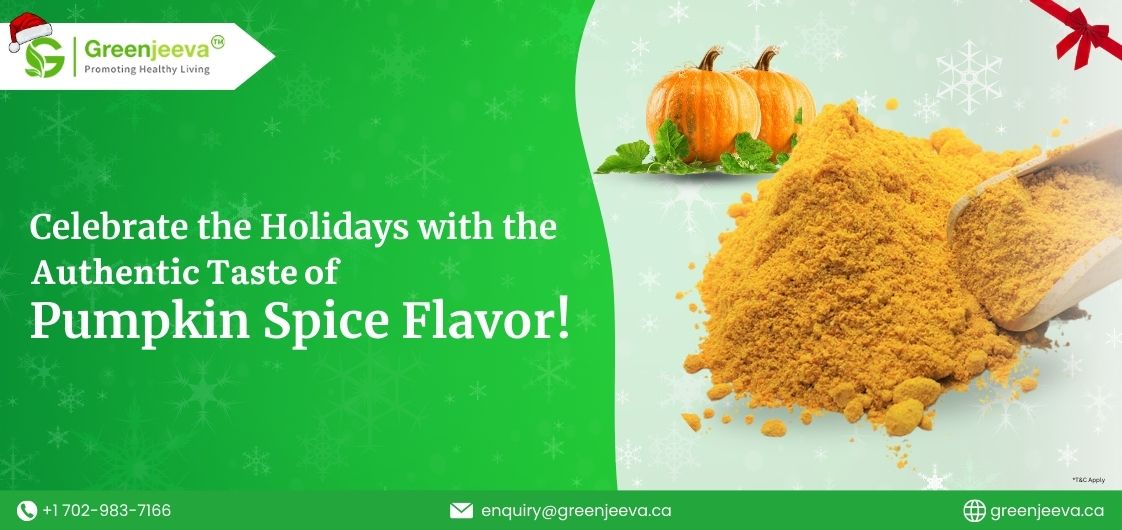
Organic pumpkin powder is a different category entirely: it's the actual fruit, dehydrated and milled, not a spice blend riding on the name. A finished product built around real pumpkin powder can genuinely claim to contain pumpkin, which is a distinction that still isn't universally true across the pumpkin spice category more than two decades after the trend started.
WHAT IS ORGANIC PUMPKIN POWDER?
Organic pumpkin powder is made from Cucurbita pepo, using the ripe fruit, dried and milled into a fine powder. Green Jeeva's specification describes it as a fine, yellow-orange powder with a mesh size of 60 to 80, moisture maintained at not more than 10 percent, and a mildly sweet, earthy flavor carried over from the fresh fruit.
Nutritionally, it's naturally rich in vitamins A and C, potassium, beta-carotene, dietary fiber, and antioxidants, according to Green Jeeva's own product documentation. That vitamin A and beta-carotene content is exactly why the drying method matters so much for this ingredient: those are the compounds most vulnerable to being lost in processing.
WHY DRYING METHOD CHANGES WHAT YOU'RE ACTUALLY BUYING
This is the detail most pumpkin powder listings skip entirely. Pumpkin's characteristic color and much of its nutritional value come from carotenoids, including beta-carotene, and these compounds are notably sensitive to heat, light, and oxygen exposure during processing.
The drying method used has a measurable effect on how much of that carotenoid content survives. Research on dehydrated vegetables has found that conventional hot-air drying can cause carotenoid losses exceeding 50 percent, while gentler methods like microwave vacuum drying have shown carotenoid retention above 89 percent compared to conventional drying in pumpkin specifically. Freeze-drying has also been studied specifically for pumpkin powder and generally performs well for both carotenoid and phenolic retention, though the exact result still depends on the specific freeze-drying schedule and final temperature used.
Green Jeeva's own product description states that its pumpkins are carefully cleaned and gently dried to retain natural color, flavor, and nutrient profile, which is the right instinct. The practical takeaway for anyone sourcing this ingredient: ask which specific drying technology sits behind that claim, since "gentle drying" on its own doesn't tell you whether you're getting hot-air, vacuum, or freeze-dried retention performance, and those differ meaningfully.
PUMPKIN POWDER VS. PUMPKIN PURÉE
These aren't interchangeable, and the difference goes beyond moisture content. Purée is a wet, high-moisture product with a limited shelf life once opened and specific cold-chain or preservation requirements. Powder is dehydrated to a low moisture content, giving it a substantially longer shelf life and easier handling in dry-blend formats.
Functionally, powder suits dry applications: spice blends, dry mix bases, baked goods, and beverage premixes where a wet ingredient would be impractical. Purée suits applications that specifically need moisture and a smooth wet texture, such as traditional baking recipes or sauces. Reconstituting powder with water gets you closer to purée for some applications, but the two aren't a direct one-to-one substitute without adjusting the rest of the formulation for the added or removed moisture.
APPLICATIONS ACROSS FOOD, BEVERAGE, AND SUPPLEMENT MANUFACTURING
In beverages, organic pumpkin powder is the ingredient that can make a pumpkin spice latte or seasonal drink actually contain pumpkin, rather than relying on spice flavoring alone. It dissolves into lattes, smoothies, and functional beverage premixes without the shelf life and handling issues of a wet purée.
In baking, it functions as both a flavor and color ingredient in muffins, breads, and seasonal baked goods. It also appears in soups, seasoning blends, and high-fiber snack formulations, and in pet food applications for natural texture and digestibility.
WHAT TO ASK YOUR SUPPLIER
Ask specifically which drying method was used, since this affects both color retention and carotenoid content more than most other processing variables. Confirm mesh size if a specific texture or dissolution behavior matters for your application. Request the certificate of analysis for moisture content, microbiological testing, and organic certification rather than relying on general product description language alone.
SOURCE BULK ORGANIC PUMPKIN POWDER IN CANADA
Green Jeeva supplies organic pumpkin fruit powder to Canadian food, beverage, and nutraceutical manufacturers, with a 60 to 80-mesh specification, moisture maintained at not more than 10 percent, and 25 kg commercial packaging as the standard pack size. Certificate of analysis and organic certification documentation are available on request.
Ready to source bulk organic pumpkin powder?
Request a certificate of analysis, a sample, and wholesale pricing, including confirmation of the drying method used.
Contact us: https://www.greenjeeva.ca/contact-us
DISCLAIMER
Organic pumpkin powder is supplied as a raw ingredient for food, beverage, and dietary supplement manufacturing. Finished-product claims should be substantiated by the manufacturer and comply with applicable regulations in the target market. This article is written by Green Jeeva's QA and RA team for sourcing and formulation guidance.