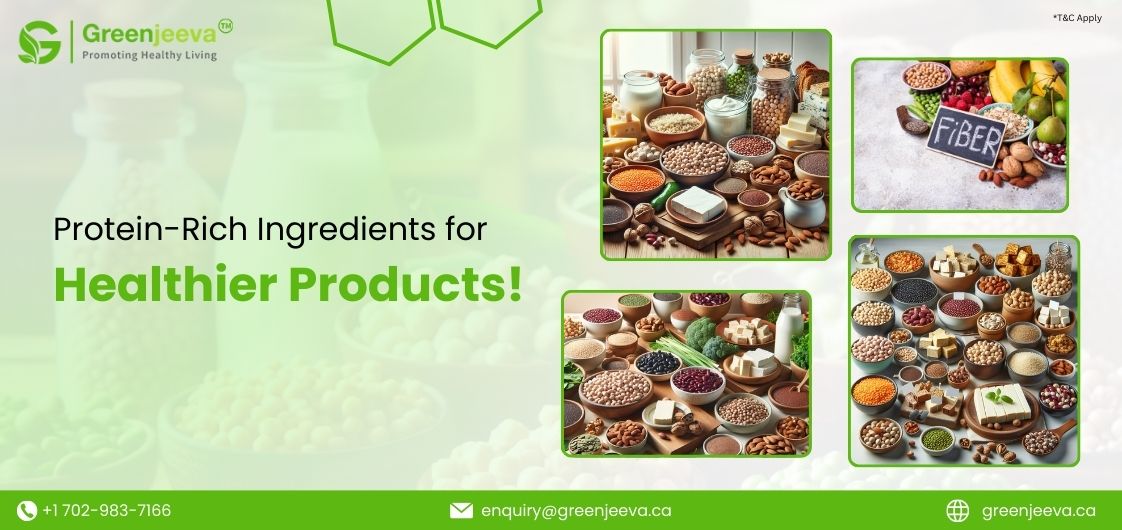
The Rise of Protein Rich Ingredients, and How Manufacturers Can Choose The Best
Summary, the quick version
Protein bars, shakes, and blends look simple on the shelf, but the ingredient behind them is chosen through a fairly technical process.
Pea, soy, rice, and hemp protein each behave differently in a formula in solubility, taste, texture, and amino acid composition.
There is no single best protein ingredient. The right one depends on the format, the label, and the allergen profile you need.
Green Jeeva Canada supplies organic pea protein powder, standardized to approximately 80 percent protein, tested and documented for manufacturers.
Request a free sample and place a bulk order quotation on the website, with dispatch from the Surrey and Pantos warehouses in Canada.
Walk down any supplement aisle, and protein is on almost everything now bars, shakes, cereals, and even coffee creamer. It has become the ingredient every category wants to be associated with. Behind that shift is a much quieter decision that every manufacturer must make once, which protein ingredient goes into the formula.
That choice is notaboutfollowing a trend. It comes down to how a specific protein source behaves once it hits water, heat, or a mixer, and whether it fits the label a brand is trying to build. This guide is written for food, beverage, and supplement manufacturers in Canada who are comparing protein ingredients for a formulation. It walks through how the common plant and dairy protein sources differ functionally, how to match one to your product, and how to source and specify it.
Why the Protein Aisle Looks the Way It Does
More brands are formulating around protein content than they used to, across bars, beverages, and everyday foods, not just classic sports nutrition. That shift has pulled a wider range of protein ingredients into mainstream manufacturing, including plant sources alongside the dairy proteins that used to dominate the category.
Part of this is simply more formats needing protein at all, and part of it is more manufacturers wanting a plant-based or allergen-friendly option alongside a traditional one. Either way, the practical result for a procurement team is the same. There are now several credible protein ingredients to choose between, and picking the right one is a formulation decision, not just a label decision.
That decision gets harder before it gets easier, mostly because the ingredient names sound more similar than the ingredients actually are. Pea protein, soy protein, rice protein, and hemp protein all get grouped under the same plant-based protein banner in marketing copy, but a formulator cannot treat them as swappable. The next section breaks down where they genuinely differ.
How the Common Protein Ingredients Actually Differ
Pea, soy, rice, hemp, and whey protein are not interchangeable. Each has its own solubility, taste, texture, and amino acid composition, and those differences show up the moment you try to formulate with them. Understanding the differences up front saves a lot ofreformulationlater.

None of these differences make one protein source better than another in the abstract. They just mean each one suits a different job. Rice protein alone is limited in one amino acid, which is exactly why it is so often blended with pea protein, since the two complement each other's amino acid gaps and give a more complete profile together than either does alone.
Matching the Protein Ingredient to Your Product
Once you know how these ingredients differ, choosing between them becomes a matter of matching function to format. A ready-to-drink beverage needs a highly soluble protein, while a dense bar can tolerate a coarser one. Allergen and label goals narrow the list further.
For a smooth, ready-to-drink beverage, prioritize a highly soluble protein such as pea or soy.
For a vegan, allergen-friendly product avoiding both dairy and soy, pea and rice protein, often blended together, is a common choice.
For a bar or baked format, texture matters less, which opens the door to hemp or rice protein for their flavor and label appeal.
For a neutral flavor where the protein should not be noticeable, rice or whey protein tends to work best.
For a complete amino acid profile from a single plant source, soy protein is the simplest option.
Whichever direction you land on, the decision should start with the product you are building, not with whichever protein ingredient is currently trending. A format-first approach gets you to the right ingredient faster and avoids a reformulation down the line. There is one more layer worth understanding before you get to the specification, and that is how the protein was processed.
How Processing Method Affects the Ingredient You Get
Two suppliers can sell the same-named protein and hand you fairly different materials, because how the protein was isolated changes its texture, color, and solubility. Concentrates, isolates, and hydrolysates from the same plant are not identical, and knowing which one you are buying matters as much as knowing the source.
A concentrate is the least processed of the three, so it keeps more of the original plant material alongside the protein, which can mean a stronger flavor and a lower protein percentage. An isolate is processed further to strip most of that background material away, giving a higher protein percentage, a milder taste, and often better solubility. A hydrolysate goes a step further still, partially breaking down the protein itself, which can improve solubility again but adds cost and sometimes an even more distinct taste.
None of these is automatically the right choice. A concentrate can be perfectly suitable for a bar where flavour intensity is not a concern, while a beverage brand chasing a clean, neutral drink will usually need an isolate. This is exactly the kind of detail that belongs on your specification rather than being assumed from the ingredient name alone.
What to Confirm on a Protein Ingredient Specification
A protein ingredient is defined by more than its name. The specification is where you confirm the actual protein content, the source, and the processing method behind the material, which is what turns a general category name into something you canapprove.
Protein content, usually expressed as a percentage, with the test method stated.
Botanical or dairy source, and whether the material is a concentrate, an isolate, or a hydrolysate.
Solubility and particle size, since both affect how the protein performs in your process.
Allergen status, since this is often the deciding factor for a plant protein choice.
Heavy metal and microbiological limits with test methods.
Non-GMO and organic certification where relevant to your label.
Confirming these points before you commit to a supplier means the material that arrives behaves the same way in your process as the sample you tested. Once the specification is settled, sourcing itself is straightforward.
Sourcing Protein Ingredients from Green Jeeva Canada
Green Jeeva Canada supplies organic pea protein powder for food, beverage, and supplement manufacturing, tested and documented. You can qualify a sample, then scale to a bulk order. Here is what a procurement team needs to know.
Organic pea protein powder, standardized to approximately 80 percent protein.
Green Jeeva Canada is COR, FDA, Halal, Kosher, GMA, and CFIA certified, and the material is fully traceable.
Heavy metals and microbiology are tested by USP methods, with a certificate of analysis for each lot.
Available in bulk pack sizes suited to both pilot batches and production runs.
A free sample is available, and a bulk order quotation can be placed on the website.
A zero-questions-asked return policy backs your first order.
Stock ships same day from the Surrey and Pantos warehouses in Canada, and documents download after registration.
If you are blending protein sources or building a wider functional range, pea protein pairs well with ingredients such as rice maltodextrin powder for texture and psyllium husk powder for binding, both available through the same sourcing process. Sampling a few complementary ingredients alongside your main protein source is often the fastest way to land on a finished formula you are happy with.
Ready to source bulk protein ingredients in Canada?
View stock, the pricing structure, compliance documents, MOQ, and pack size on the website, request a free sample, and place a bulk order quotation with Green Jeeva Canada.
Protein ingredients described in this article are supplied by Green Jeeva Canada as raw materials for food, beverage, and dietary supplement manufacturing. Any nutrition or health claim on a finished product should be verified and substantiated by the manufacturer and comply with applicable regulations in the target market. This article is written by the Green Jeeva Canada QA and RA team for sourcing and formulation guidance.