What Supplement Manufacturers Should Know Before Sourcing Ashwagandha Extract Powder
Summary, the quick version
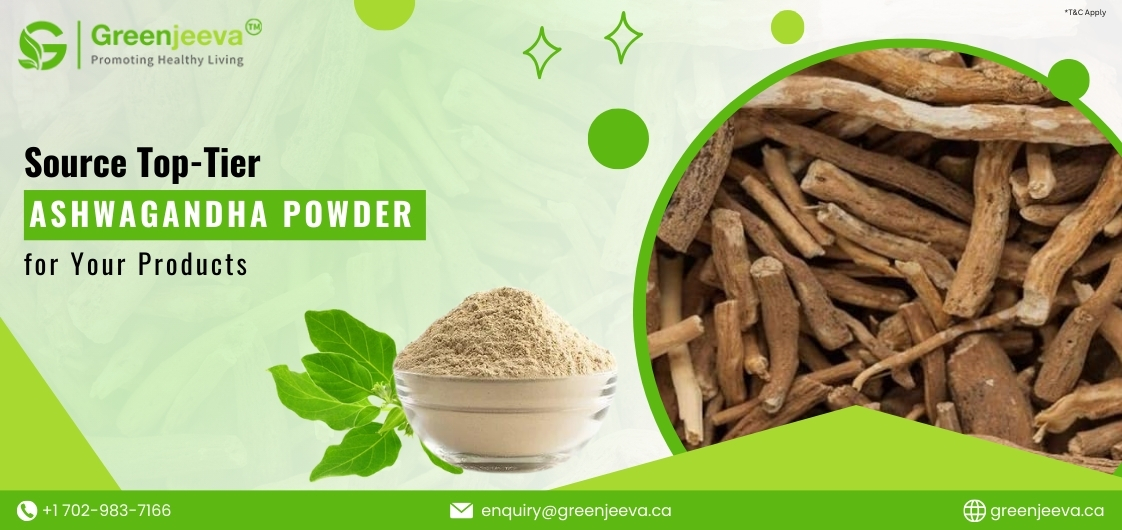
Ashwagandha extract powder is a concentrated extract of Withania somnifera root, standardized to its marker compounds, the withanolides.
Green Jeeva Canada offers two root-based grades, standardized to 2.5 percent and 5 percent total withanolides by gravimetry.
The withanolide percentage is the number that matters most, but it only means something alongside the test method, which Green Jeeva states on the specification.
Premium sourcing means screening for authenticity, since some extracts are boosted with isolated withanolides or undisclosed leaf. Both Green Jeeva grades are root only.
Pack sizes run from 1 kg to 25 kg, with 20 gm free samples that can be requested online. Place a bulk order quotation on the website, with dispatch from the Canada warehouse.
Ashwagandha is one of the most sourced botanicals in the supplement industry, and that popularity cuts both ways. It means wide availability, but it also means wide variation in quality, standardization, and authenticity.
This guide is written for supplement and nutraceutical manufacturers and procurement teams in Canada who are sourcing a premium ashwagandha extract powder. It focuses on standardization, plant part, authenticity, testing, and documentation, so you can tell a genuine premium extract from one that only looks premium on paper.
What Ashwagandha Extract Powder Is
Ashwagandha extract powder is a concentrated extract of Withania somnifera, usually from the root. It is standardized to the plant's marker compounds, the withanolides, and supplied as a fine powder. Unlike plain root powder, which is milled whole root, the extract concentrates the material to a defined withanolide level for a consistent, compact ingredient.
Two forms of ashwagandha are common in supplement manufacturing. Root powder is the milled whole root at natural concentration, which suits whole-food and traditional formats. Extract powder is concentrated and standardized, which suits capsules and tablets where a defined amount in a small dosematters. This guide focuses on the standardized extract, since that is where sourcing quality varies the most.
Withanolides and Standardization, the Number That Matters Most
Withanolides are the marker compounds used to standardize ashwagandha extract. Commercial grades are commonly standardized to 2.5 or 5 percent withanolides. That percentage is the single most important number on the specification, because it lets a formulator dose to a target and compare one extract with another on a like-for-like basis.
There is a catch that separates informed buyers from the rest. The withanolide number depends on how it is measured. A gravimetric method can read higher, because it may capture related matter alongside the defined withanolides, while an HPLC method is more specific. A 5 percent by gravimetry and a 5 percent by HPLC are not the same material. When you compare quotes, always compare on the same test method, and confirm the method on the specification. A number without a method is not a specification, it is a marketing figure.
Green Jeeva Canada supplies two root-based grades, so you can match the standardization to your product. Both state the assay method, gravimetry, on the specification.

Both grades pass 100 percent through a 60 mesh screen, are highly water-soluble, and are tested to low heavy metal limits and a full microbiological panel by USP methods, with 36-month shelf life. They are also GMO-free, allergen-free, BSE and TSE-free, and non-irradiated. The full specification and certificate of analysis are available after registration.
Root, or Root and Leaf, and Why the Plant Part Matters
Traditional ashwagandha uses the root, and many buyers specify root-only extracts. Some extracts include the leaf, which can raise the measured withanolide number but changes the composition and the traditional profile. Neither is wrong, but they are different materials, so the plant part belongs on your specification.
This matters for two reasons. First, your label and your product story may depend on a root-only claim, which you can only make if the extract is genuinely root-only. Second, two extracts can show the same withanolide percentage while being quite different materials if one quietly uses a leaf to reach the number. Ask the supplier to state the plant part in writing, and treat an unwillingness to do so as a warning sign. Both Green Jeeva Canada grades are made from the root, which is stated on the specification.
The Quality Risks to Screen for When Sourcing Ashwagandha
Because ashwagandha is in such high demand, it attracts shortcuts. A premium sourcing process screens for the common ones, since a certificate of analysis alone does not prove authenticity. The goal is to confirm that the withanolides are naturally derived from the stated plant part and that the material is clean and correctly identified.
Screen for these risks before you approve a supplier.
Spiking, where isolated withanolide fractions are added to lift the number rather than concentrating the whole extract.
Method games, where a higher gravimetric figure is presented as if it were an HPLC figure.
Undisclosed leaf, used to raise the withanolide number without stating the plant part.
Solvent residues from harsh extraction, or a refusal to disclose the extraction method.
Heavy metals and pesticides, which a botanical from any origin can carry without proper control.
The defense is documentation and verification. Ask for identity testing that confirms Withania somnifera, a withanolide result with the method stated, and a full certificate of analysis covering heavy metals, microbiology, and pesticides. Where the stakes are high, send a sample to an independent third-party laboratory. A supplier confident in the material will support this rather than resist it.
Extraction and Cultivation Considerations
Quality is shaped before the extract is even made. Cultivation conditions influence the plant's composition, and the extraction method influences what ends up in the powder. A premium extract usually comes from well-controlled cultivation and a clean extraction process rather than the cheapest available inputs.
On cultivation, organic material is grown without synthetic pesticides, which lowers the residue risk and supports an organic claim on the finished product. On extraction, water and gentle processes are common, while harsh chemical solvents raise the risk of residues. You do not need to audit every step, but you should ask the supplier how the extract is made and whether residual solvents are tested. Clear answers are a sign of a supplier that understands its own material.
What a Premium Ashwagandha Extract Specification Includes
A complete specification is what turns all of the above into something you can approve. For a premium ashwagandha extract, confirm the identity, the standardization, and the safety panels, each with a method. Anything missing is a question to ask before you buy, not after.
Botanical name Withania somnifera and the plant part, root or root and leaf.
Withanolide percentage with the test method stated, such as HPLC or gravimetry.
Extraction ratio and the extraction method.
Heavy metal and microbiological limits with test methods.
Pesticide residue screening.
Allergen and non-GMO status and organic certification were claimed.
Traceability to the source, so the paperwork ties to the lot.
Writing these into your purchase specification makes suppliers directly comparable and gives your QA team a clear pass or fail at goods-in.
Matching the Extract to Your Supplement Format
The right ashwagandha form and standardization depend on your product. A capsule or tablet usually calls for a standardized extract that fits a defined amount into a small dose, while a whole-food powder blend may suit the root powder. The withanolide level you choose should match your dose and your label.
Capsules and tablets, where a standardized extract delivers a defined level in a small fill.
Powders and stick packs, where either the root powder or a lower standardization can work.
Gummies and functional formats, where a consistent, well-characterized extract helps.
Organic ranges, where an organic-certified extract or root powder matches the label.
Decide the format and the target amount first, then choose the form and the standardization to match. That order keeps the sourcing decision tied to the product rather than to whichever number looks highest.
Sourcing Premium Ashwagandha Extract Powder from Green Jeeva Canada
Green Jeeva Canada supplies ashwagandha in more than one form, tested and documented for supplement manufacturing. You can qualify a sample, then scale to a bulk order, with logistics built for both. Here is what a procurement team needs to know.
Our range includes organic ashwagandha root powder, a standardized ashwagandha extract powder, organic ashwagandha C/S, and organic ashwagandha root granular, HD grade.
A branded option, AshwaLite, for brands that want a defined branded ingredient.
Withanolide content, heavy metals, microbiology, and pesticides tested by appropriate methods, with a certificate of analysis for each lot.
Green Jeeva Canada is COR, FDA, Halal, Kosher, GMA, and CFIA certified, and the material is fully traceable.
Available in pack sizes from 1 kg to 25 kg, suited to both pilot batches and production runs.
Free samples and bulk order quotations can be placed on the website.
A zero-questions-asked return policy backs your first order.
Stock ships the same day from the Canada warehouse, and documents are downloaded after registration.
Confirm the plant part, the withanolide percentage, and the test method on the specification, and review the certificate of analysis for the specific lot before you formulate.
Ready to source premium ashwagandha extract powder in Canada?
View stock, the pricing structure, compliance documents, MOQ, and pack size on the website, request a free sample, and place a bulk order quotation with Green Jeeva Canada.
[Request a sample and quote]
Ashwagandha extract powder is supplied by Green Jeeva Canada as a raw ingredient for dietary supplements and food manufacturing. Finished-product claims, including any wellness or structure-function statements, should be verified and substantiated by the manufacturer and comply with applicable regulations in the target market. This article is written by the Green Jeeva Canada QA and RA team for sourcing and formulation guidance.