
Organic Cocoa Powder, 10-12% Alkalized: Why pH and Origin Matter More Than the Fat Number
Most cocoa powder spec sheets lead with two numbers: fat content and "alkalized" as a yes/no flag. Neither tells a formulator what they actually need to know. Alkalization is a spectrum that runs from barely touched to nearly black, and where a batch sits on that spectrum determines color, flavor, and how it behaves in a beverage system, not just whether the label says "Dutch-processed." Separately, where the cocoa was grown affects something spec sheets rarely mention at all: cadmium content, which is a real compliance consideration for anyone whose finished product eventually reaches an export market.
This guide covers both, along with the specification benchmarks that should actually drive a sourcing decision for Organic Cocoa Powder, 10-12% Alkalized.
What Organic Cocoa Powder, 10-12% Alkalized, Actually Is
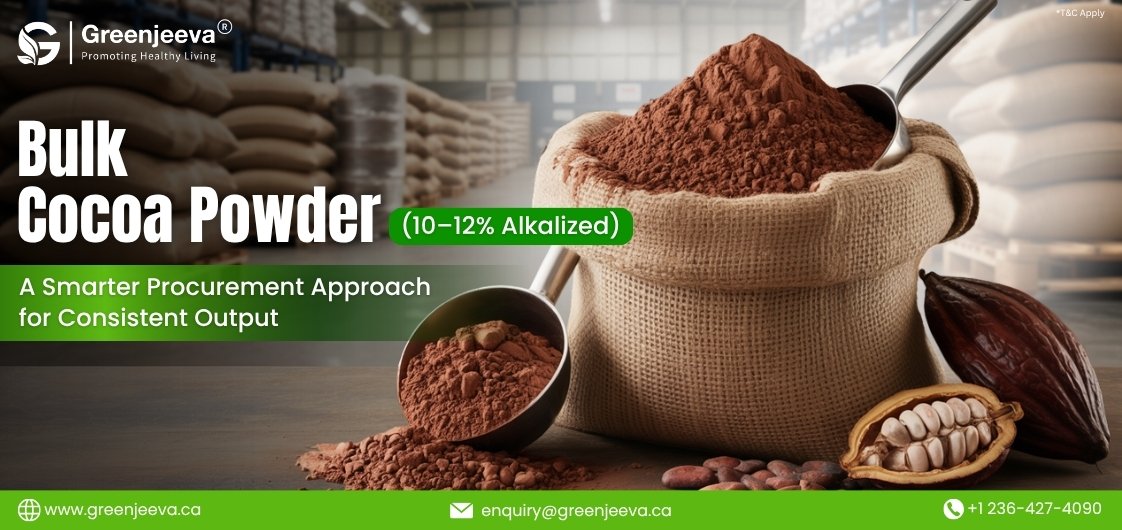
Organic Cocoa Powder, 10-12% Alkalized, is produced from the seeds of Theobroma cacao, fermented, dried, and roasted before being pressed to remove most of the cocoa butter and treated with an alkalizing agent to neutralize its natural acidity. Green Jeeva's Organic Cocoa Powder, 10-12% Alkalized, retains roughly 10 to 12 percent residual cocoa butter after pressing, a range commonly referred to as low-fat or standard-fat cocoa powder, alongside higher-fat grades in the 20 to 24 percent range used for richer, more indulgent applications.
The alkalization step, also called Dutch processing, is what separates this product from natural cocoa powder. It's supplied as a certified organic ingredient under the Canada Organic Regime, in 25 kg commercial packaging suitable for bulk food and beverage manufacturing.
Alkalization Is a Spectrum, Not a Single Spec
Natural cocoa powder sits at a pH of roughly 5.0 to 5.8, acidic enough to react with baking soda and carrying a sharp, fruity, sometimes astringent flavor. Alkalization raises that pH using an alkalizing agent, most commonly potassium carbonate, and the degree of treatment determines where the finished powder lands on a functional spectrum: lightly alkalized cocoa typically sits around pH 6.8 to 7.2 with a rounder, more classically chocolatey flavor, medium alkalization moves toward pH 7.2 to 7.6, and heavily alkalized grades can reach pH 7.6 to 8.2 or higher, producing a darker, milder, almost earthy profile.
This matters for two practical reasons. First, alkalized cocoa loses the acidity that activates baking soda, so formulations built around alkalized cocoa need baking powder instead, or a reformulated leavening system if switching from natural cocoa. Second, the pH level directly affects dispersibility: higher alkalization generally improves how cleanly the powder wets and disperses in liquid systems, which is why alkalized grades are frequently preferred for beverage mixes and instant drink powders over natural cocoa.
A spec sheet that simply states "alkalized" without a pH value or alkalization level description is missing the number thatactually predicts performance.

Matching Alkalization Level to Application
The right alkalization level depends on what the finished product needs to do, not on habit or the lowest quote.
Beverage systems, dry mixes, and instant drink powders generally benefit from mid-range alkalization, where dispersibility improves without pushing flavor toward the muted, earthy notes of heavy alkalization.
Baked goods using baking powder as the leavening agent can generally use any alkalization level, but formulations converting from natural cocoa need to remove baking soda and adjust baking powder accordingly.
Confectionery, coatings, and products where a deep, consistent dark color is the primary goal, such as dark sandwich cookies, often call for heavier alkalization, even though flavor intensity can actually decrease at the extreme end of the range.
Dairy applications and ice cream typically favor moderate alkalization for a smooth, balanced chocolate flavor without the acidic edge of natural cocoa.
The Origin Question: Why Bean Source Affects More Than Flavor
Cocoa bean origin is usually discussed in terms of flavor character, but it also drives a real, measurable difference in cadmium content. Cadmium occurs naturally in soil, and cacao grown in the geologically younger, volcanic soils common across Latin America consistently tests higher in cadmium than cacao grown in West Africa's older soils, with Southeast Asian origins generally falling in between. This isn't a processing defect; it's a function of where the tree grew.
Canada does not currently set a cocoa or chocolate-specific maximum level for cadmium under Health Canada's List of Contaminants and Other Adulterating Substances in Foods, unlike the European Union, which enforces binding cadmium limits on cocoa and chocolate products. For a Canadian manufacturer selling exclusively into the domestic market, this is background context. For a manufacturer whose finished product might reach the EU or another market with binding cadmium limits, bean origin becomes a genuine compliance question that a generic "heavy metals: pass" line on a COA doesn't answer.
The practical takeaway: buyers with any export exposure should ask which growing region their cocoa comes from and request the actual cadmium result, not just a pass or fail statement.

Specification Benchmarks to Request
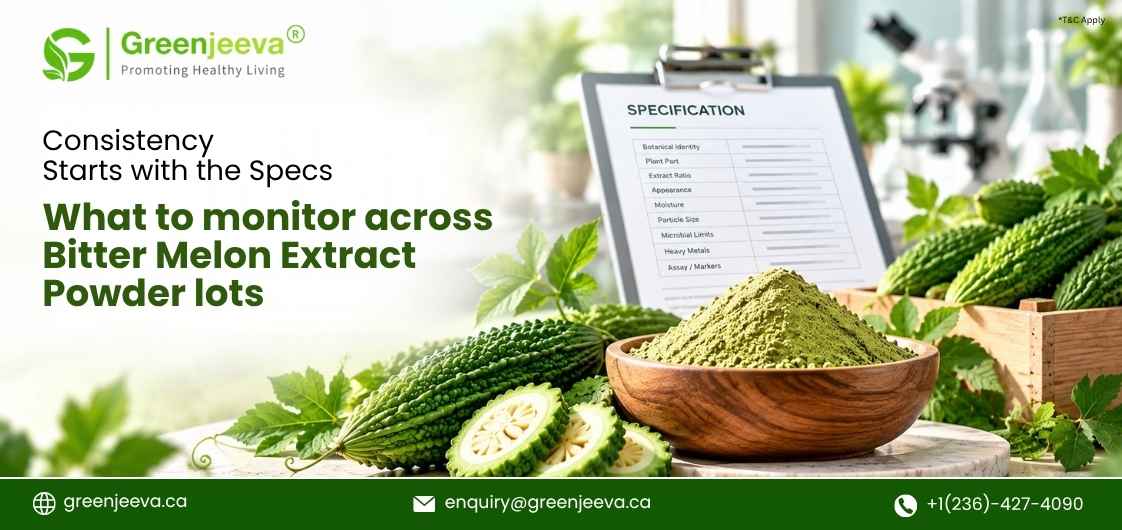
A cocoa powder COA worth relying on should include more than fat content and an organic certificate:
Fat content confirmed at 10 to 12 percent, not just described as "low-fat"
pH value or alkalization level, not only a yes/no alkalized designation
Heavy metals results, with cadmium reported as a specific figure rather than a general pass statement
Microbiological testing results
Moisture content and particle size or mesh data, both of which affect dispersibility and shelf stability
Current Canada Organic Regime certification tied to the specific batch
Documentation Canadian Buyers Should Request
Beyond the COA itself, buyers qualifying a cocoa supplier should confirm batch traceability back to a specific growing region or blend of regions, since origin blending can shift cadmium results between shipments even when fat content and pH stay consistent. Requesting a sample lot and comparing its full COA, including the cadmium figure, against a second later shipment is a practical way to confirm a supplier's documentation holds up over time rather than just on the first order.