Grape Seed Powder vs. Resveratrol: What Canadian Formulators Need to Know Before Sourcing
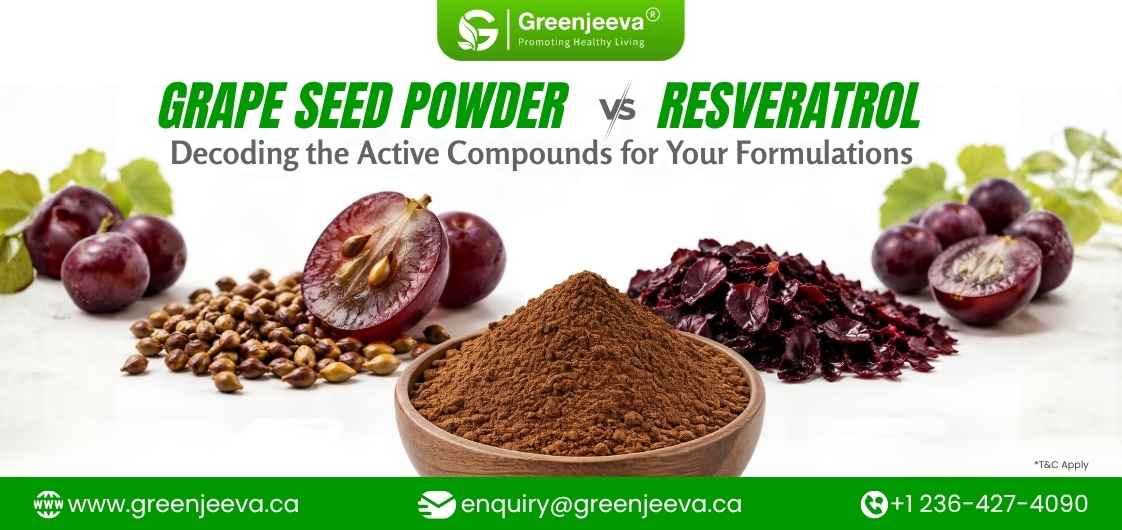
"Grape antioxidants" aren't all the same, even though grape seed powder and resveratrol are often used interchangeably. For formulators, mixing them up is a mistake:
- Different sources: They come from different parts of the fruit.
- Different benefits: They work differently in the body.
- Different rules: They carry different regulatory and label requirements.
Here is a quick guide to help you choose the right compound for your exact product goals.
The Core Distinction: Different Compound, Different Part of the Grape
Resveratrol is a single polyphenol compound found in grape skin, produced by the plant as part of its own defense response. Grape seed powder and its more concentrated form, organic grape seed extract powder, come from the seed, not the skin. Rather than one isolated molecule, it delivers a blend of multiple compounds that work together, dominated by oligomeric proanthocyanidins (OPCs).
Here's the side-by-side formulators need:

A detail worth putting directly on your spec sheet: grape seed powder is not a meaningful resveratrol source. Seeds do contain a trace amount of resveratrol, but the skin carries the far higher concentration, which is why resveratrol supplements are typically produced from grape skin extract or Japanese knotweed, never from seed material. If a resveratrol claim is what you're formulating toward, organic grape seed powder cannot get you there on its own; the two are frequently combined precisely because they act through different pathways rather than because one is a substitute for the other.
What's Actually in Organic Grape Seed Powder
For formulators evaluating it as a natural antioxidant ingredient, the composition is well documented. Standardized extracts can reach high OPC concentrations, drawn from a broader phenolic matrix that includes catechins, epicatechins, and gallic acid derivatives. Comparative lab analysis of grape pomace consistently shows seed extracts carrying significantly higher total polyphenols and grape seed tannins content than skin extracts from the same fruit — the seed, in other words, is where the concentrated polyphenols and tannins actually live, even though the skin is where resveratrol lives.
This matters directly when creating a skin health supplement. OPCs are valued in formulations designed to support structural matrix components like collagen and elastin. While both ingredient types offer legitimate natural antioxidant strategies, they rely on completely distinct chemical profiles that should not be confused in product documentation.
Why the Distinction Matters for Canadian Regulatory Filings
This isn't just a semantic issue; it affects which Health Canada pathway your product actually falls under.
- As a Natural Health Product: The NNHPD maintains a compendial monograph specifically for grape seed extract, which guides product license applications and label language. Referencing an established monograph is faster than filing new safety/efficacy evidence, since Health Canada doesn't need to re-evaluate ingredients already established under monograph conditions.
- As a supplemented food ingredient: Following a premarket safety review, Health Canada permits grape seed extract (oligomeric proanthocyanidins) as a supplemental ingredient in supplemented foods under conditions set out in the Notice of Modification.
Resveratrol sits under different and generally less standardized labeling conventions in Canada. If your product lists "grape seed extract" but relies on resveratrol's research base, that's a mismatch a regulatory reviewer will catch. Getting the ingredient identity right at the sourcing stage protects your filing later.
Market Context: Why Grape Seed Is Scaling in Supply Chains
While both ingredients are growing categories, grape seed powder, specifically in powdered format, has become a dominant commercial form. Industry analyses report the powder segment leading the category in product-format share.
For Canadian formulators, North America represents a mature sourcing market driven by high supplement demand. Supply chains built around wine-region grape pomace by-products are ideally set up to support consistent, standardized bulk organic grape seed powder.
Sourcing Checklist: What to Confirm Before You Order
Before placing an order with an organic grape seed powder supplier in Canada, verify:
- OPC standardization %, backed by a current Certificate of Analysis (CoA), not a marketing claim.
- Organic certification chain of custody, covering the seed source itself, not just the finished blend.
- Confirmation the product is not being marketed as a resveratrol source unless resveratrol has been separately added and disclosed.
- Heavy metal, pesticide, and microbial testing on a per-batch basis.
- Particle size and solubility specs, relevant to capsule fill, beverage clarity, or topical formulation.
- Regulatory documentation aligned to the NNHPD monograph or the supplemented foods Notice of Modification.
The Bottom Line
Grape seed powder and resveratrol are both valuable, well-researched options, but they are not the same ingredient, they don't share an evidence base, and mixing them up in a formulation brief or a label claim creates a regulatory gap. Organic grape seed powder earns its place through oligomeric proanthocyanidins concentration, a documented Health Canada pathway, and a mature North American supply chain. Resveratrol earns its place through a different mechanism entirely.
Before your next formulation run, confirm with your supplier exactly which compound is standardized and disclosed on the CoA, OPCs, resveratrol, or both, and build your product specifications around what's actually in the batch.
Have a formulation question or need a spec sheet? Get in touch with the Green Jeeva team for samples and current documentation.