
Organic Paprika Powder's Growing Impact on the Food Industry
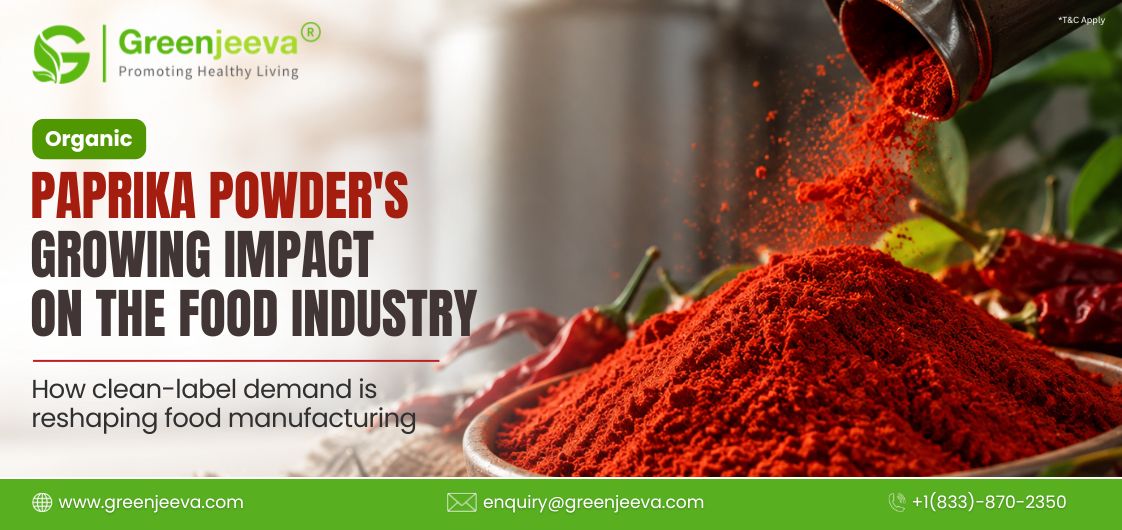
Organic paprika powder ground (dried Capsicum annuum) is quietly reshaping food formulations as manufacturers move away from synthetic dyes and additive-heavy ingredient panels. Its impact shows up across snack foods, sauces, ready meals, and increasingly plant-based products, wherever brands need natural color and flavor without a long ingredient list.
The organic spices market is projected to grow from roughly $24.6 billion in 2026 to $33.3 billion by 2031, a CAGR of about 6.3%, according to Mordor Intelligence. Powder remains the leading form in the category, accounting for more than half of organic spice volume, per Grand View Research. Within that, organic paprika powder continues to gain share as brands move away from synthetic colorants and toward recognizable, single-ingredient inputs.
Here's what's driving that growth, where the ingredient is showing up, and what food manufacturers and formulators should know about sourcing it well.

What Is Organic Paprika Powder?
Organic paprika powder is produced from the dried, ground fruit of Capsicum annuum, a member of the Solanaceae (nightshade) family, grown without synthetic pesticides or fertilizers and certified organic under the applicable regulatory scheme. Peppers are harvested at peak ripeness, then dried and ground into a fine powder; the drying temperature and time directly affect final color intensity and flavor, which is why processing control matters as much as the raw pepper quality. The result carries a natural red-orange color from carotenoid compounds and a flavor ranging from sweet to hot, depending on the pepper variety used.

The Clean Label Shift Behind Paprika's Rise
The bigger story here is a shift in what food brands are willing to put on a label. Consumers are scrutinizing ingredient lists more closely than ever, and that's pulling reformulation activity toward recognizable, single-ingredient inputs. Organic paprika powder benefits from that shift on three fronts:
Natural Coloring Agent: As synthetic dyes face increasing reformulation pressure, organic paprika powder offers a natural, label-friendly source of red-orange color for sauces, snacks, and prepared foods, without needing "artificial color" on the ingredient panel.
Flavor Enhancer: Beyond color, it contributes a mild sweetness and depth that product developers use to build flavor complexity without synthetic flavor additives; a lever formulators reach for when simplifying a label without flattening the flavor profile.
Nutritional Contribution: Paprika carries carotenoids and antioxidant compounds, which supports its use in products positioned around a cleaner, more functional ingredient panel.
Where the Impact Is Showing Up
- Snack foods: Chips, popcorn, and extruded snacks, for color and a savory note
- Ready meals and convenience foods: Frozen and microwaveable products
- Sauces and condiments: Tomato-based sauces, marinades, and spice blends
- Meat products: Rubs, cures, and marinades, where it also acts as a mild natural preservative
- Plant-based products: Organic paprika powder for food manufacturing at scale is increasingly moving into meat alternatives, where color and flavor both matter for consumer acceptance
- Proprietary spice blends: Organic paprika powder for seasoning blends often plays a base note, letting other spices lead while it carries color and mild depth
Organic Paprika Powder vs. Chili Powder
One question comes up constantly as brands build these formulations: is paprika interchangeable with chili powder? Not quite.
In short: If a formulation needs color and a clean single-ingredient label, organic paprika powder is the better fit. If it needs a ready-made spicy seasoning profile, chili powder's blend does more of that work in one ingredient.

Navigating the Category's Growing Pains
The demand curve is real, but it's not friction-free. A few challenges shape how this ingredient moves through supply chains right now:
- Supply chain disruptions: Recent years have underscored the value of diversified, multi-region sourcing rather than single-origin dependency
- Price fluctuations: Organic spices are more exposed to weather and smaller-scale production swings than conventional equivalents, which is pushing more buyers toward longer-term supply agreements
- Authenticity and adulteration risk: As demand rises, so does the incentive to cut corners; buyers increasingly expect COA-backed testing per lot, not just a certificate on file
Where This Is Headed
A few directions are worth watching as the category matures:
- Functional foods- paprika's antioxidant profile is pulling it further into functional and fortified food formulations, not just flavor/color applications
- Plant-based products- as meat-alternative formulations mature, paprika's role in replicating visual and flavor cues expected from meat products is expanding
- Global and fusion cuisine- as mainstream food brands lean into global flavor profiles, paprika is finding new applications outside its traditional Hungarian and Spanish culinary roots
Sourcing & Certification: What Actually Matters
For manufacturers acting on this trend, sourcing well comes down to certification and consistency.
Certification differs by market. In Canada, any organic claim or use of the Canada Organic logo requires certification under the Canada Organic Regime (COR), from a CFIA-accredited body or one recognized under an equivalency arrangement and a valid organic product certificate must be presented at import, or the shipment gets rejected at declaration. Under the US–Canada equivalency arrangement, USDA NOP-certified paprika can generally be sold as organic in Canada too, though Canada-specific restrictions still apply (notably, products grown using sodium nitrate can't carry an organic claim in Canada regardless of USDA status).
Beyond the certificate, ask for: a Certificate of Analysis (COA) per lot covering microbial testing, heavy metals, and ash content; traceability back to farm or region of origin; and consistency guarantees on color, flavor, and heat level across batches.
For a bulk organic paprika powder supplier, manufacturer, or exporter serving the Canadian market specifically, the practical difference is whether they carry COR certification and CFIA import documentation as standard rather than only a US organic certificate that leaves the compliance gap for the buyer to close. That also matters for buyers building private label organic paprika powder programs, where certification and format consistency (sweet, hot, smoked) need to hold across every production run.
The Sustainability Angle
Organic paprika production avoids synthetic pesticides and fertilizers, reducing chemical runoff and supporting soil health. Many suppliers also work directly with small-scale growers, supporting more transparent, traceable supply chains a point worth highlighting for brands marketing to sustainability-conscious buyers.
Ready to Source?
If you're evaluating suppliers for an upcoming production run, start with documentation, not price. Explore Green Jeeva's organic paprika powder specs, COA, and MOQ.